
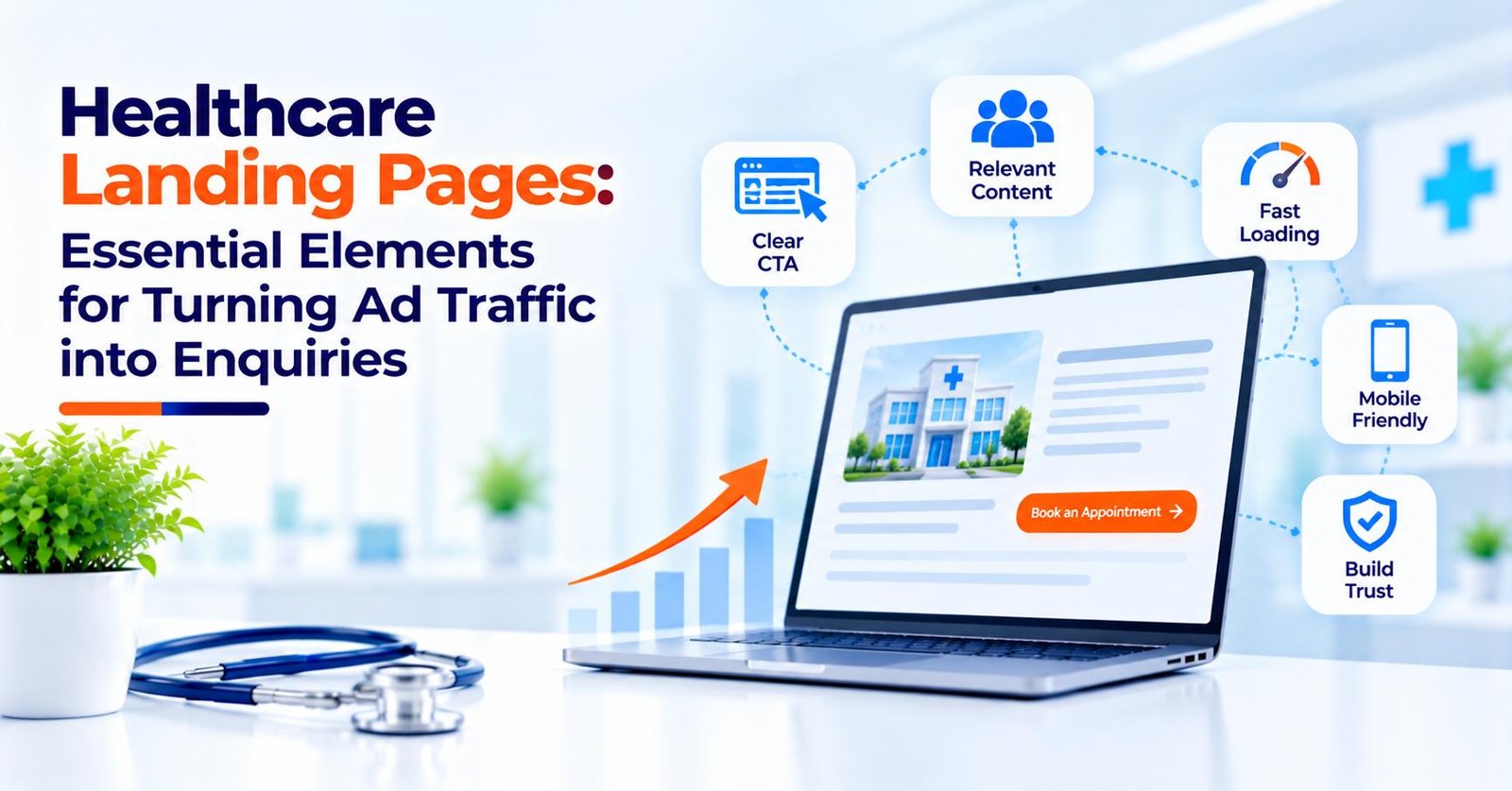
Running digital advertising campaigns can help hospitals, clinics, and healthcare providers reach people who are actively looking for medical services. However, getting clicks is only one part of a successful campaign. The real challenge is encouraging visitors to take the next step, whether that means booking an appointment, requesting a consultation, or contacting the clinic for more information.
This is where a well-designed healthcare landing page becomes important. A landing page gives visitors focused information about a particular service and guides them toward a clear action without unnecessary distractions. When the page is relevant to the advertisement, easy to navigate, and built around patient needs, it can support better enquiry generation.
At World SEO Services, we understand that healthcare marketing requires a balance between digital performance, clear communication, patient trust, and responsible messaging. Through strategic Healthcare Lead Generation Services, healthcare businesses can improve the journey from an advertisement click to a meaningful enquiry.
In this guide, we will explore the essential elements of a healthcare landing page, common mistakes to avoid, and practical ways to make landing pages more effective.
What Is a Healthcare Landing Page?
A healthcare landing page is a dedicated web page designed to support a specific marketing objective. Unlike a general hospital homepage, it focuses on one service, treatment category, department, or campaign.
For example, a clinic running an advertising campaign for dermatology consultations may create a landing page that explains its dermatology services, introduces the relevant specialist, answers common questions, and provides an appointment enquiry form.
A landing page typically includes:
- A clear headline related to the advertised service.
- Concise information about the treatment or healthcare service.
- Relevant details about the doctor, clinic, or hospital.
- A visible call to action.
- A simple enquiry form or contact option.
- Mobile-friendly design and fast loading speed.
- Clear privacy information and trustworthy content.
The goal is not simply to attract visitors. It is to help them understand the service and decide whether they want to contact the healthcare provider.
1. Create a Headline That Matches the Advertisement
The headline is one of the first things visitors notice after clicking an advertisement. If it does not match what they expected to find, they may leave the page without exploring further.
Suppose an advertisement promotes dental implant consultations. If the landing page opens with a broad headline about the hospital’s complete range of medical services, visitors may struggle to understand whether they are in the right place.
A more focused headline would be: “Explore Dental Implant Consultation Options at Our Clinic.”
This immediately connects the page to the visitor’s original interest.
How to write an effective headline
- Mention the specific service or department.
- Use simple language that visitors can understand.
- Keep the main message clear and direct.
- Avoid exaggerated promises or unsupported medical claims.
- Add a short supporting sentence that explains what visitors can expect.
World SEO Services recommends maintaining a consistent message across advertisements and landing pages. This consistency helps visitors find the information they expected and makes the next step easier to understand.
2. Explain the Healthcare Service Clearly
Visitors should not have to search through several sections to understand what a clinic offers. A landing page needs to explain the relevant service in a clear and useful way.
For a hospital or clinic, this may include:
- What the department or service covers.
- Which types of consultations are available.
- What patients can expect during an initial appointment.
- Whether a consultation can be requested online or by phone.
- Which clinic location provides the service.
- Any relevant preparation instructions, where appropriate.
For example, a fertility clinic’s landing page may explain its consultation process, available fertility assessment services, and how someone can request an appointment.
The content should answer the visitor’s immediate questions without overwhelming them with lengthy medical explanations.
Healthcare information must also be accurate and appropriately qualified. Avoid language that guarantees results, promises a cure, or suggests that one treatment is suitable for everyone.
3. Add a Clear and Relevant Call to Action
A call to action (CTA) tells visitors what they can do next. Without a visible CTA, interested visitors may leave the page without contacting the provider.
Common healthcare landing page CTAs include:
- Request an Appointment
- Book a Consultation
- Contact the Clinic
- Enquire About the Service
- Request a Callback
Choose a CTA that matches the campaign’s objective. If the advertisement is designed to generate consultation requests, the page should make that action easy to complete.
Place CTAs where visitors can find them
Consider including a CTA:
- Near the top of the page.
- After the main service explanation.
- Near relevant doctor or department information.
- At the end of the page.
On mobile devices, a visible call button can be helpful, provided it does not block important content or make navigation difficult.
The wording should also set realistic expectations. For example, “Request an Appointment” is more accurate than “Get Immediate Treatment” when the page only collects enquiries.
4. Keep Enquiry Forms Short and Simple
An enquiry form is often the main conversion point on a healthcare landing page. If the form asks for too much information, visitors may abandon it before submitting their details.
For an initial appointment enquiry, a form may only need:
- Name.
- Phone number or email address.
- Preferred contact method, if relevant.
- Department or service of interest, when not already specified.
- A short message field, if necessary.
The exact fields should depend on the clinic’s process and the purpose of the campaign.
Reduce unnecessary form friction
Make the form easy to understand and complete. Use clear field labels, explain which fields are required, and provide helpful error messages if a visitor misses something.
Avoid collecting detailed medical histories or sensitive health information through a general marketing form unless there is a clear need and an appropriate, secure process for handling it.
The page should also explain how the submitted information will be used. Healthcare businesses should collect only the information they need and handle it in accordance with applicable privacy and data-protection requirements.
A shorter form is not automatically better in every situation, but every additional field should have a clear purpose.
5. Build Trust Through Accurate Healthcare Information
Healthcare decisions often involve personal concerns, uncertainty, and sensitive information. Visitors need to feel confident that the provider is legitimate and that the information presented is reliable.
A landing page can support trust by including relevant, verifiable details such as:
- The clinic’s name and location.
- The doctor’s name and verified qualifications.
- Relevant department or service information.
- Contact details and consultation procedures.
- Accurate information about facilities, where applicable.
- Clear privacy and enquiry-handling information.
If professional registrations, accreditations, or certifications are mentioned, ensure that they are genuine, current, and relevant.
Avoid fabricated statistics, misleading claims, unverified patient stories, or statements that imply guaranteed medical outcomes. Images should also accurately represent the healthcare provider and its facilities.
World SEO Services focuses on the importance of combining conversion-oriented design with credible content. In healthcare, a page should help visitors make an informed decision rather than pressure them into submitting a form.
6. Introduce the Relevant Doctor or Department
Visitors who are considering a consultation may want to know who provides the service and where it is available.
Where appropriate, introduce the relevant doctor or department with concise, verified information.
For example, a specialist landing page may include:
- The doctor’s full name.
- Relevant qualifications and specialty.
- The services provided.
- Clinic location and consultation availability.
- A short explanation of how to request an appointment.
Use genuine photographs and accurate descriptions. Avoid unsupported claims about a doctor’s experience, reputation, or treatment success.
If a campaign covers a hospital department rather than one specialist, explain the department’s scope and how visitors can reach the appropriate team.
The information should be relevant to the advertised service. Adding details about every doctor and department may distract visitors from the action the page is intended to support.
7. Make the Landing Page Mobile-Friendly
Many people access healthcare information through smartphones. A page that works well on a desktop but is difficult to use on a phone can create unnecessary barriers.
A mobile-friendly healthcare landing page should have:
- Readable text without excessive zooming.
- Buttons large enough to tap comfortably.
- Forms that are easy to complete on a touchscreen.
- Properly sized images.
- Clear spacing between sections.
- Clickable phone numbers where appropriate.
- Navigation that does not cover important content.
Test the entire enquiry process on different screen sizes. Check whether visitors can read the information, open the form, enter their details, and submit an enquiry without difficulty.
Mobile usability is not just a design consideration. It is part of making healthcare information and contact options accessible to visitors.
8. Improve Page Loading Speed
A slow landing page can interrupt the visitor journey before the content even appears. Large images, unnecessary scripts, poorly configured hosting, and excessive third-party tools can contribute to slow loading.
To improve performance:
- Compress images without noticeably reducing their quality.
- Use modern image formats where supported.
- Remove scripts and plugins that are not needed.
- Minimise unnecessary animations and visual effects.
- Review hosting and caching configurations.
- Test loading performance on mobile networks as well as desktop connections.
Tools such as Google PageSpeed Insights can help identify technical issues and suggest improvements.
Speed should be checked regularly, particularly after significant page redesigns or the addition of new tracking tools. A faster page does not guarantee more enquiries, but it removes one potential obstacle in the visitor experience.
9. Answer Common Questions Before Visitors Ask
Visitors may hesitate to submit an enquiry because they do not know what happens next. A short FAQ section can address practical concerns and make the page more useful.
Depending on the service, relevant questions may include:
- How can I request an appointment?
- Where is the clinic located?
- What should I bring to my first consultation?
- How can I contact the clinic for more information?
- Will someone contact me after I submit the form?
Only include answers that the healthcare provider can confirm. If appointment availability, fees, or consultation procedures vary, explain that clearly rather than presenting a universal answer.
FAQs should focus on genuine visitor concerns. Avoid adding unrelated questions simply to increase page length or insert more keywords.
For medical questions, provide general, medically reviewed information where appropriate and direct individual concerns to a qualified healthcare professional.
10. Use Relevant Images and a Clean Layout
Visual design affects how easily visitors can understand and navigate a landing page. A cluttered layout with multiple banners, pop-ups, and unrelated images can make the main message harder to follow.
Use a clean structure that prioritises the advertised service.
Helpful visual elements may include:
- A genuine photograph of the clinic or relevant department.
- A verified photograph of the specialist.
- Simple icons that support the content.
- Clear section headings.
- Enough spacing between text and form fields.
Avoid stock images that could misrepresent the facility or suggest services that are not available. Decorative elements should not push the main CTA too far down the page.
The purpose of design is to support clarity, credibility, and usability—not to overwhelm visitors with visual effects.
11. Track the Right Conversion Metrics
A landing page should be evaluated using more than the number of visitors it receives. Healthcare businesses need to understand whether the page is generating relevant enquiries and whether those enquiries progress through the contact process.
Important metrics include:
Landing page conversion rate: The percentage of visitors who complete the desired action.
Cost per enquiry: The advertising spend associated with generating an enquiry, calculated using a consistent attribution method.
Form completion rate: The proportion of visitors who begin and successfully submit a form, if form-start tracking is configured.
Call enquiries: The number of relevant calls attributed to the campaign, where reliable call tracking is available.
Qualified enquiry rate: The proportion of enquiries that meet the clinic’s agreed criteria for relevance.
Appointment booking rate: The proportion of enquiries that result in a booked appointment, when the clinic can measure this accurately.
For example, a page may generate many enquiries but few relevant appointment requests. This could indicate a mismatch between the advertisement and page content, unclear service information, or a form that attracts people who are not looking for the advertised service.
Use analytics and advertising data carefully, with appropriate consent and privacy safeguards. Avoid sending identifiable patient information or sensitive health details to advertising platforms through tracking events.
12. Test and Improve the Landing Page Regularly
A landing page should not be treated as a finished project that never needs attention. Small, controlled tests can help identify which changes improve the visitor experience.
Consider testing one element at a time, such as:
- A service-focused headline.
- Different CTA wording.
- A shorter enquiry form.
- The placement of the contact section.
- A clearer explanation of the consultation process.
- A more relevant image.
Before testing, define the main conversion goal and decide how success will be measured. Where possible, use enough data to make a reasonable comparison rather than drawing conclusions from a handful of enquiries.
Do not evaluate changes based only on clicks or form submissions. Consider enquiry quality, appointment outcomes, user experience, and the cost of acquiring a relevant enquiry.
With a structured approach, Healthcare Lead Generation Services can support continuous improvement instead of relying on guesswork.
Common Healthcare Landing Page Mistakes to Avoid
Even a visually attractive landing page can struggle to generate enquiries if its basic elements are missing.
Watch out for these common issues:
- Sending all advertisements to the homepage: Visitors may have to search for the service they originally clicked on.
- Using vague headlines: The page does not immediately explain its purpose.
- Making contact details difficult to find: Interested visitors may leave rather than search for a phone number.
- Asking for excessive information: Unnecessary fields increase the effort required to submit an enquiry.
- Making unsupported medical promises: Overstated claims can mislead visitors and damage trust.
- Ignoring mobile users: Small text, difficult forms, and poorly placed buttons create friction.
- Failing to track outcomes: The clinic cannot determine whether advertising enquiries are relevant.
- Leaving old information online: Outdated doctor details, locations, or consultation instructions create confusion.
Regular reviews can help healthcare providers identify these issues before they affect more visitors.
How World SEO Services Can Help Improve Healthcare Landing Pages
A successful healthcare landing page requires more than an attractive design. It needs a clear message, relevant content, a simple conversion path, technical reliability, and meaningful performance measurement.
World SEO Services helps healthcare brands approach digital marketing with these factors in mind. Its healthcare marketing work can support landing page planning, healthcare website development, search optimisation, paid advertising strategy, content improvement, and enquiry tracking.
A structured approach to Healthcare Lead Generation Services can help clinics and hospitals identify gaps between advertising traffic and actual enquiries. The focus should remain on reaching relevant audiences, providing accurate information, and making it easier for interested visitors to contact the right healthcare provider.
The best approach depends on the service being promoted, the audience, the clinic’s resources, and the quality of its existing website and enquiry process.
Conclusion
Healthcare landing pages play an important role in connecting advertising campaigns with people who are looking for medical services. A relevant headline, clear service information, visible calls to action, simple enquiry forms, accurate doctor details, and mobile-friendly design can make the visitor journey easier.
However, a strong landing page is not only about increasing form submissions. Healthcare providers also need to build trust, protect personal information, maintain accurate medical content, and measure whether enquiries are genuinely relevant.
By combining these elements with regular testing and performance analysis, hospitals and clinics can make more informed decisions about their digital campaigns. World SEO Services can help healthcare businesses strengthen their landing page strategy as part of a broader approach to digital visibility and lead generation.
Frequently Asked Questions
1. What is the purpose of a healthcare landing page?
A healthcare landing page is designed to provide focused information about a particular medical service, department, or consultation. Its purpose is to help visitors understand the offering and take a relevant action, such as requesting an appointment or contacting the clinic.
2. What should a healthcare landing page include?
A healthcare landing page should generally include a relevant headline, clear service information, verified doctor or department details where appropriate, a visible call to action, an easy enquiry form, contact information, mobile-friendly design, and suitable privacy information.
3. How can a healthcare landing page generate more enquiries?
Healthcare providers can improve the enquiry experience by matching the page to the advertisement, explaining the service clearly, simplifying forms, making contact options easy to find, improving loading speed, and testing page elements. Results depend on factors such as traffic quality, service demand, and the clinic’s follow-up process.
4. Should every healthcare advertising campaign have a separate landing page?
A separate landing page is often useful when a campaign promotes a specific service, specialist, or patient need. It allows the content and CTA to match the advertisement more closely. However, the decision should depend on campaign goals, available resources, and whether an existing page already meets the visitor’s needs.
5. How do Healthcare Lead Generation Services help improve landing page performance?
Healthcare Lead Generation Services can help healthcare providers assess campaign targeting, landing page content, enquiry forms, conversion tracking, and follow-up processes. These activities help identify barriers in the visitor journey and provide a clearer basis for improving the relevance and quality of enquiries.