
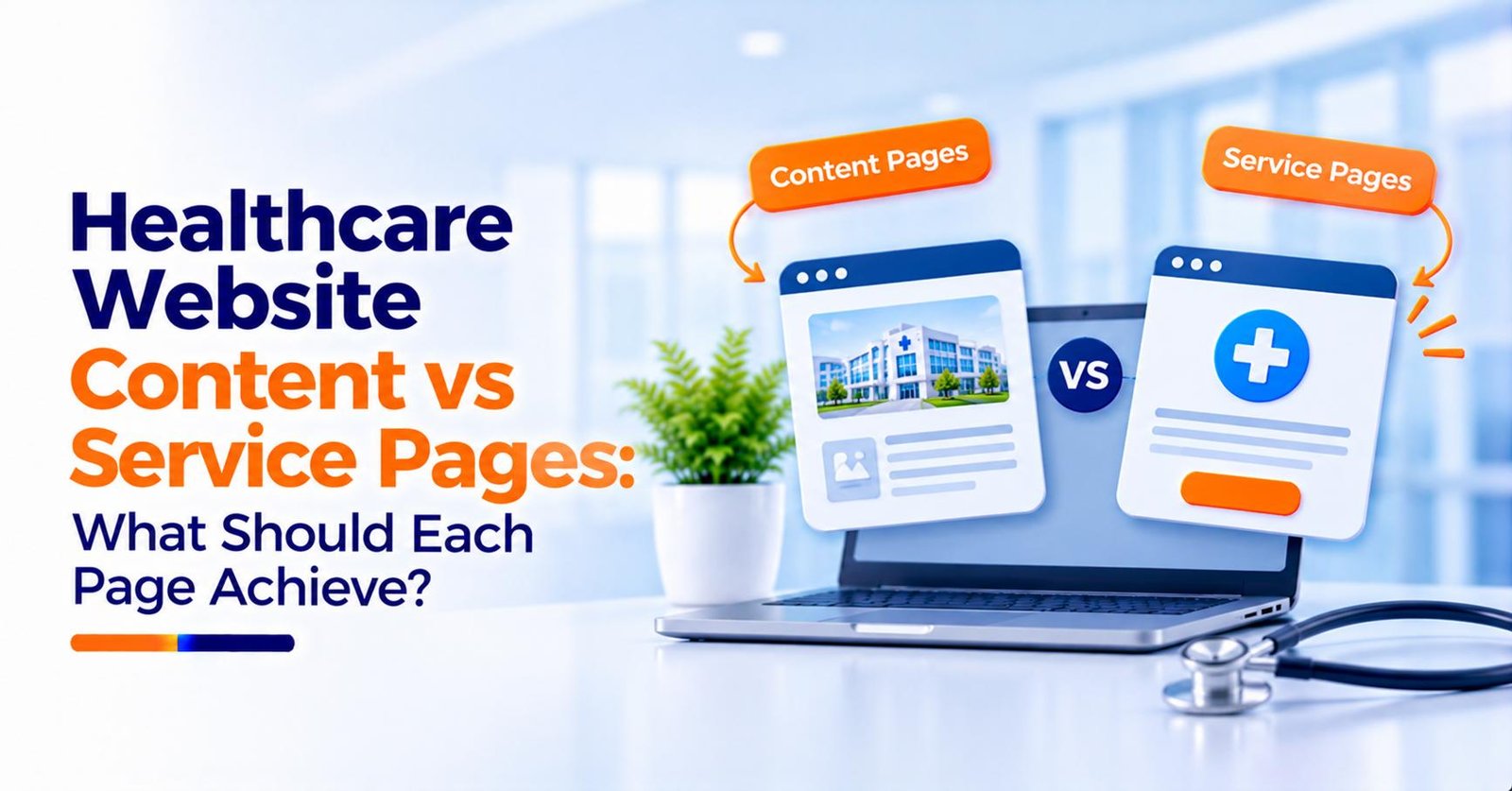
A hospital website needs more than a homepage and a list of medical services. Visitors may arrive with different questions. Some want to understand a health condition, others are looking for a particular treatment, and some want to find a suitable doctor or book an appointment.
If every webpage tries to achieve the same purpose, visitors may struggle to find the information they need. A blog article explaining a medical condition should not read like a treatment sales page, and a service page should not leave visitors searching through lengthy educational content to understand what the hospital offers.
This is why hospitals need a clear distinction between informational website content and service pages.
Both are important parts of a healthcare content strategy, but each serves a different purpose. Informational content helps people understand topics and find answers, while service pages explain the healthcare services available and guide visitors towards relevant next steps.
At World SEO Services, healthcare content marketing focuses on creating useful, well-organised website content that supports search visibility and helps healthcare organisations communicate their services clearly.
In this article, we will explore the differences between healthcare website content and service pages, what each page should achieve, and how hospitals can use both effectively.
1. What Is Healthcare Website Content?
Healthcare website content includes the information published across a hospital or clinic’s website to educate visitors, answer common questions, and explain different healthcare topics.
It can include:
- Health awareness articles.
- Educational blog posts.
- Frequently asked questions.
- Doctor biographies.
- Department information.
- Treatment explanations.
- Hospital updates.
- Patient guidance resources.
For example, a hospital may publish an article titled “What Are the Common Causes of Knee Pain?”
The article can explain general causes, common symptoms, when medical evaluation may be appropriate, and why a professional assessment matters.
Its main purpose is to provide useful information rather than directly promote one particular service.
What Should Informational Content Achieve?
Informational content should help visitors:
- Understand a health-related topic.
- Find answers to common questions.
- Learn relevant medical terminology.
- Understand general healthcare processes.
- Discover related educational resources.
- Identify when professional medical guidance may be needed.
It should be accurate, easy to understand, and reviewed appropriately before publication.
2. What Are Healthcare Service Pages?
Healthcare service pages are dedicated webpages that explain a specific medical service, treatment category, department, or healthcare facility offered by a hospital or clinic.
Unlike general informational articles, these pages focus on what the healthcare organisation provides.
For example, an orthopaedic hospital may have a service page explaining its knee replacement services.
The page may include:
- An introduction to the service.
- Relevant medical conditions or concerns.
- Available treatment options.
- Information about the department.
- Doctor details.
- Facilities and related services.
- Appointment and contact information.
The purpose is to help visitors understand the service and determine the appropriate next step.
What Should a Service Page Achieve?
A well-structured service page should:
- Clearly explain the service offered.
- Help visitors understand its relevance.
- Present accurate information about the department or treatment.
- Introduce relevant doctors and facilities.
- Answer common service-related questions.
- Make contact or appointment information easy to find.
A service page should not guarantee treatment outcomes or suggest that a particular procedure is suitable for every person.
3. Healthcare Website Content vs Service Pages: Key Differences
Although both page types support the hospital’s digital presence, their objectives and content structures are different.
A. Primary Purpose
Informational Content: Answers general questions and educates visitors about a healthcare topic.
Service Pages: Explain a specific service offered by the hospital and provide relevant information about accessing it.
B. Search Intent
Informational articles generally target searches where people want to learn something.
Examples:
- What causes back pain?
- How is blood pressure measured?
- What is arthroscopy?
- Why are regular dental check-ups important?
Service pages generally target searches where people are exploring a specific service or provider.
Examples:
- Orthopaedic services in Jaipur.
- IVF treatment services.
- Cardiology department at a hospital.
- Diagnostic imaging services near me.
Some searches have mixed informational and commercial intent, so the page should address the dominant purpose while providing useful supporting information.
C. Content Structure
Informational articles usually contain explanations, educational headings, practical guidance, and FAQs.
Service pages generally include a service introduction, available facilities, relevant doctors, treatment information, and contact options.
D. Conversion Goals
Informational content may encourage visitors to explore related articles, understand a healthcare topic, or visit a relevant department page.
Service pages are more directly connected to actions such as:
- Requesting an appointment.
- Calling the hospital.
- Exploring doctor profiles.
- Contacting the relevant department.
- Learning about available services.
E. Content Length
There is no fixed word count for either page type.
An informational article should be as detailed as needed to answer the topic properly. A service page should include enough information to explain the service without adding unrelated content simply to increase word count.
F. Internal Linking
Informational articles can link to relevant department and service pages when those links help readers.
Service pages can link to related educational articles, doctor profiles, and other relevant services.
This creates a useful connection between educational information and the hospital’s actual offerings.
4. What Should an Informational Healthcare Page Include?
Informational content should be planned around the questions people are likely to ask.
Here are the important elements to consider.
A. A Clear and Relevant Title
The title should communicate the exact topic.
For example:
“Common Causes of Knee Pain and When to Seek Medical Advice”
This tells visitors what they can expect from the article.
Avoid vague titles that do not explain the subject.
B. A Helpful Introduction
The introduction should briefly explain the topic and why it matters.
Avoid starting with lengthy promotional descriptions of the hospital.
Readers should quickly understand what the article covers.
C. Clear Educational Headings
Organise the article into meaningful sections.
For example, an article about knee pain may include:
- What Is Knee Pain?
- Common Causes of Knee Pain.
- Symptoms That May Need Medical Attention.
- How Doctors Evaluate Knee Problems.
- General Ways to Support Knee Health.
- Frequently Asked Questions.
Headings should follow a logical order and make the content easy to scan.
D. Accurate and Understandable Explanations
Healthcare content should use simple language without losing medical accuracy.
Explain technical terms where necessary and avoid presenting general information as a personal diagnosis.
E. Relevant FAQs
FAQs can address common questions that are not fully answered in the main article.
For example:
- Can knee pain have different causes?
- When should someone consult a doctor?
- Can exercise affect knee health?
Answers should be concise, accurate, and appropriately qualified.
F. Relevant Internal Links
Link to related educational resources or service pages where they provide additional value.
For example, an article explaining common knee problems may link to the hospital’s orthopaedics department page.
The link should help the reader continue their research rather than interrupt the article.
5. What Should a Healthcare Service Page Include?
A service page should provide enough information for visitors to understand what the hospital offers.
A. Clear Service Introduction
Start by explaining the service in simple language.
For example, an orthopaedics service page can introduce the department’s focus on bone, joint, muscle, and related musculoskeletal concerns.
Visitors should understand the purpose of the page immediately.
B. Conditions or Concerns Addressed
Where appropriate, explain the medical conditions or concerns associated with the service.
For example, an orthopaedics page may discuss:
- Joint-related concerns.
- Sports injuries.
- Fractures.
- Bone conditions.
- Mobility-related problems.
Only include conditions that are relevant to the actual services offered by the hospital.
C. Available Treatments and Procedures
Explain the relevant treatments or procedures available through the department.
Use clear descriptions and avoid suggesting that every treatment is suitable for every patient.
Treatment decisions should be based on individual medical evaluation.
D. Doctor and Department Information
Include relevant doctor profiles, qualifications, specialities, and department details.
This helps visitors understand which medical professionals are associated with the service.
Ensure that all professional information is verified and updated.
E. Facilities and Supporting Information
Where relevant, explain the facilities and support services associated with the department.
For example:
- Diagnostic facilities.
- Consultation arrangements.
- Department location.
- Available appointment options.
- Relevant hospital facilities.
Avoid making claims about equipment or services that the hospital does not provide.
F. Clear Call to Action
Make the next step easy to understand.
Suitable CTAs may include:
- Book an Appointment.
- Contact the Hospital.
- Explore Doctor Profiles.
- Get Department Information.
The CTA should be visible without making the page overly promotional.
6. How Informational Content and Service Pages Work Together
Informational articles and service pages should not operate as separate parts of the website. They can support each other through relevant internal links and a well-planned content structure.
Consider a hospital that offers cardiology services.
Its website may include the following content:
Informational Article: “Understanding Common Causes of Chest Discomfort”
This article provides general educational information and explains why medical assessment may be necessary.
Service Page: “Cardiology Services”
This page explains the hospital’s cardiology department, available services, relevant doctors, and appointment information.
The informational article can link to the cardiology service page where appropriate. The service page can also link back to educational resources that help visitors understand related topics.
This creates a logical journey:
- A visitor searches for information about a health concern.
- They find a relevant educational article.
- The article answers their general questions.
- They explore the related hospital service page.
- They review department and doctor information.
- They contact the hospital if they want further assistance.
This approach supports both user experience and website organisation.
7. How to Choose the Right Page Type Based on Search Intent
Before creating a new webpage, identify what the searcher expects to find.
Search intent helps determine whether the topic needs an informational article, a service page, or another type of webpage.
A. Informational Intent
The visitor wants to learn about a topic.
Examples:
- What is cataract?
- Causes of frequent headaches.
- How does physiotherapy work?
- What is IVF?
Recommended page type: Educational article or medical information page.
B. Commercial Investigation Intent
The visitor is comparing services, providers, or available options.
Examples:
- How to choose an IVF centre.
- What to consider when selecting a hospital.
- Types of diagnostic imaging services.
Recommended page type: A detailed comparison or guidance article, supported by relevant service information.
C. Transactional or Local Service Intent
The visitor is looking for a service provider or wants to take an action.
Examples:
- Book a cardiologist appointment.
- Orthopaedic hospital in Jaipur.
- IVF centre near me.
Recommended page type: Relevant service page, department page, or location page with accurate contact and appointment information.
D. Mixed Search Intent
Some searches combine educational and service-related expectations.
For example, someone searching for “knee replacement treatment” may want to understand the procedure and find a hospital offering it.
Recommended approach: Create a service page with useful educational sections and link to a more detailed article where necessary.
Search results should also be reviewed before deciding the page format because similar keywords can have different expectations.
8. How Healthcare Content Marketing Services Help Build the Right Page Structure
Planning and maintaining healthcare website content requires a clear understanding of SEO, content quality, website architecture, and search intent.
This is where professional Healthcare Content Marketing Services can support hospitals and clinics.
A. Content and Keyword Research
Research helps identify what people are searching for and which topics are relevant to the hospital’s services.
The marketing team can group keywords according to informational, commercial, and transactional intent.
B. Content Mapping
Content mapping helps decide which topics should have dedicated articles and which should be covered through service pages.
For example, a hospital may create:
- One main cardiology service page.
- Separate articles about common heart-related health topics.
- Individual doctor profile pages.
- Supporting pages about relevant diagnostic services.
This reduces unnecessary duplication and gives each webpage a clear purpose.
C. SEO-Friendly Content Creation
Professional content planning can help create pages with:
- Relevant titles and headings.
- Natural keyword placement.
- Clear explanations.
- Appropriate internal links.
- Useful FAQs.
- Readable formatting.
Healthcare content should also be reviewed by qualified professionals where medical accuracy requires it.
D. Website Content Optimisation
Existing pages may contain outdated information, unclear headings, duplicate topics, or missing service details.
Regular content audits can help identify what needs to be updated, improved, combined, or removed.
E. Performance Monitoring
Search visibility, organic traffic, page engagement, and relevant enquiries can help the marketing team evaluate how different pages perform.
The objective is to improve the usefulness of each page rather than judge every article only by appointment conversions.
At World SEO Services, healthcare content marketing can be supported through content strategy, SEO, website optimisation, and related digital marketing activities.
9. Common Mistakes Hospitals Should Avoid
Even a well-designed website may struggle to communicate effectively if its pages are not planned properly.
A. Turning Every Blog Into a Service Advertisement
Informational articles lose their value when they focus mainly on promoting the hospital.
Better approach: Answer the reader’s question first and introduce relevant hospital services naturally where appropriate.
B. Creating Service Pages With Very Little Information
A page that only mentions a treatment name and provides a contact number may not answer important visitor questions.
Better approach: Explain the service, relevant department information, available facilities, and appropriate next steps.
C. Targeting the Same Keyword With Multiple Pages
Creating several pages with almost identical topics and purposes may lead to overlapping content and unclear page targeting.
Better approach: Assign a primary purpose to each page and review existing content before creating another URL.
D. Using the Same Content on Articles and Service Pages
Repeating entire sections across multiple pages can make the website less useful.
Better approach: Give each page a distinct focus and use internal links to connect related information.
E. Ignoring Content Updates
Healthcare information, doctor details, available services, and contact information may change.
Better approach: Review important pages regularly and update them using verified information.
F. Using CTAs Without Considering Page Intent
An educational article does not always need several appointment buttons.
Better approach: Match the CTA to the visitor’s likely next step. An informational article may link to a related department page, while a service page can provide appointment options.
10. A Practical Checklist for Planning Healthcare Website Pages
Before publishing a new webpage, review the following points:
- Is the main purpose of the page clearly defined?
- Has the search intent been identified?
- Is the page informational or service-focused?
- Does the title accurately describe the content?
- Are headings organised logically?
- Is the medical information accurate and reviewed appropriately?
- Does the page provide unique value?
- Are relevant internal links included?
- Does the CTA match the page’s purpose?
- Is the content easy to read on mobile devices?
- Are doctor, department, and service details verified?
- Is the page connected to relevant sections of the website?
This checklist can help healthcare marketing teams maintain a more organised content strategy.
Conclusion
Healthcare website content and service pages serve different but equally important purposes. Informational articles help visitors understand medical topics, explore general healthcare questions, and find useful guidance. Service pages explain what a hospital offers, introduce relevant departments and professionals, and make it easier for visitors to explore the next step.
A strong healthcare website needs both. The key is to give every page a clear purpose, match its content with search intent, avoid unnecessary duplication, and connect related pages through meaningful internal links.
With a planned approach to Healthcare Content Marketing Services, hospitals can create a website that is informative, organised, and easier for visitors to navigate.
World SEO Services supports healthcare organisations through SEO, content marketing, website optimisation, and other digital marketing activities. A well-structured content strategy can help hospitals communicate their services more clearly while building a useful online resource for their audiences.
Frequently Asked Questions
1. What is the difference between healthcare website content and service pages?
Healthcare website content generally educates visitors about medical topics and answers common questions. Service pages explain the specific healthcare services offered by a hospital or clinic and provide relevant information about doctors, departments, and appointments.
2. Should every hospital service have a separate webpage?
Not necessarily. A separate page is useful when a service has enough distinct information and search demand to justify it. Related services can sometimes be covered together when doing so creates a clearer experience for visitors.
3. Can informational healthcare articles generate appointment enquiries?
Yes. Informational articles can introduce visitors to relevant hospital services through useful internal links and appropriate calls to action. However, their primary purpose should remain providing accurate and helpful information.
4. How does search intent help hospitals plan website content?
Search intent helps identify what visitors expect from a search result. It allows hospitals to decide whether a topic needs an educational article, a service page, a department page, or another type of content.
5. How can healthcare content marketing services improve a hospital website?
Healthcare content marketing services can support keyword research, content planning, page structure, SEO-friendly writing, internal linking, content updates, and performance monitoring. These activities help create a more organised and useful website experience.