
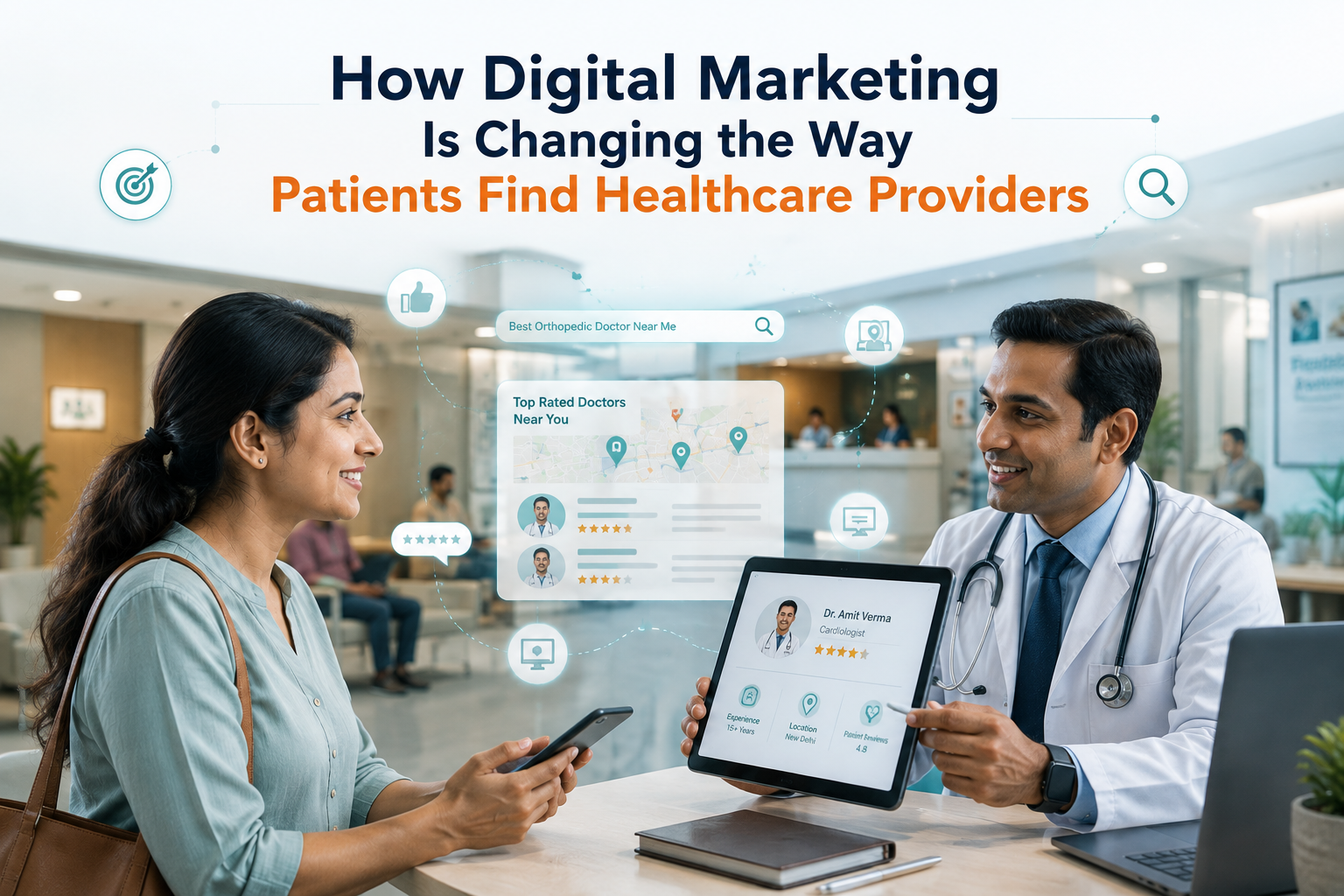
When people need a doctor, clinic, hospital, diagnostic centre, or other healthcare service, they no longer depend only on recommendations from friends and family. Today, many patients begin their search online. They may look for a specialist near them, compare healthcare providers, read reviews, explore services, or search for answers to health-related questions before making an appointment.
This shift has changed how healthcare organizations need to reach and communicate with patients.
Digital marketing has become an important part of healthcare visibility because it helps providers appear where potential patients are already searching for information and services. For an organization working with World SEO Services, the focus should not simply be on increasing website traffic. A stronger approach is to connect search visibility, useful content, local presence, reputation, and conversion opportunities into one patient-focused digital strategy.
The ultimate goal is simple: help people find relevant information, understand available healthcare services, develop confidence in a provider, and take the next appropriate step.
What Is Healthcare Digital Marketing?
Healthcare digital marketing refers to the use of online channels and strategies to help healthcare organizations reach and communicate with current and potential patients.
It can include:
- Search engine optimization (SEO)
- Local SEO and Google Business Profile optimization
- Healthcare content marketing
- Social media marketing
- Google Ads and PPC advertising
- Healthcare website development
- Online reputation management
- Lead generation
- Analytics and performance tracking
- Answer Engine Optimization (AEO)
Unlike general marketing, healthcare marketing requires greater attention to accuracy, trust, privacy, and responsible communication. People may use information found online while making important healthcare decisions, so content should be useful and carefully presented.
How Patients Search for Healthcare Providers Today
The patient journey often starts well before someone contacts a clinic or hospital.
A person experiencing a health concern may first search for general information. After that, they may look for a relevant specialist, compare providers, check reviews, explore locations, and finally visit a website before making an inquiry.
A typical digital journey can look like:
Search → Information → Comparison → Trust → Enquiry → Appointment
Different channels can influence different stages.
For example, Google may help someone discover a healthcare provider. A website may explain the available services. A doctor’s profile may provide additional confidence, while online reviews may influence the final decision.
This is why healthcare providers need more than a visually attractive website. They need a consistent digital presence across the places where patients are searching.
Search Engines Have Become an Important Starting Point
Search engines play a major role in healthcare discovery.
People may search for terms such as:
- “cardiologist near me”
- “dental clinic near me”
- “orthopedic doctor for knee pain”
- “fertility clinic in my city”
- “diagnostic centre near me”
- “hospital with emergency services”
These searches can represent very different levels of intent.
Someone searching for general health information may not be ready to contact a provider. Another person searching for a specific clinic or service may already be closer to making an appointment.
This is where healthcare SEO becomes important.
SEO helps healthcare websites improve their visibility for relevant searches through useful content, technical optimization, website structure, internal linking, local SEO, and search-intent-focused pages.
The objective should not be to rank for as many keywords as possible. The more important question is whether the website is providing the information people actually need.
Local SEO Helps Patients Find Nearby Providers
Location is especially important in healthcare.
Patients often prefer providers that are convenient to reach, particularly when they need regular consultations, diagnostic services, follow-up appointments, or ongoing care.
Local SEO can help healthcare providers become more visible for location-based searches.
An optimized Google Business Profile can provide information such as:
- Business name
- Address
- Phone number
- Website
- Working hours
- Services
- Reviews
- Photos
- Directions
However, local visibility should always be supported by accurate information. Healthcare organizations should not use misleading locations, exaggerated claims, or inaccurate service details simply to attract more searches.
A strong local strategy connects online discovery with the real information a patient needs before visiting a facility.
Healthcare Websites Are Digital First Impressions
After discovering a healthcare provider through search, many people visit its website.
The website may be their first opportunity to understand the organization in more detail.
Visitors may want to know:
- Which services are available?
- Which doctors or specialists are associated with the organization?
- Where is the facility located?
- How can an appointment be requested?
- What should they know before contacting the provider?
- Is the information easy to understand?
If these answers are difficult to find, visitors may leave and continue searching elsewhere.
A strong healthcare website should therefore provide:
- Clear service pages
- Doctor or specialist information
- Simple navigation
- Mobile-friendly design
- Fast-loading pages
- Clear contact options
- Appointment information
- Useful educational content
- Relevant trust signals
Website development and digital marketing should work together. A well-designed website has limited value if patients cannot discover it, while strong SEO cannot compensate for a confusing website experience.
Healthcare Content Helps Answer Patient Questions
Many patients search for information before searching for a particular healthcare provider.
For example, someone may first search:
“What are the common symptoms of a condition?”
Later, they may search:
“When should I see a specialist?”
Eventually, the search may become:
“Specialist near me.”
This progression creates an opportunity for healthcare content marketing.
Useful content can explain healthcare terminology, answer common questions, provide general educational information, and help readers understand when professional medical guidance may be appropriate.
Healthcare content should not attempt to replace a consultation or provide personalized medical advice. Its purpose is to give readers reliable general information in language they can understand.
For World SEO Services, this patient-first approach is an important part of creating healthcare content that is useful for both people and search engines.
Social Media Is Changing Patient-Provider Communication
Social media has created another way for healthcare brands to communicate with audiences.
Clinics and hospitals can use platforms such as Instagram, Facebook, YouTube, and LinkedIn to share:
- Health awareness information
- Educational videos
- Doctor introductions
- General wellness information
- Department updates
- Frequently asked questions
- Healthcare services
However, healthcare social media should not become a continuous stream of promotional posts.
Educational and informative content can help organizations maintain visibility while giving audiences something genuinely useful.
Healthcare brands also need to consider patient privacy, testimonials, medical claims, and sensitive information when creating social media content.
Online Reviews Influence Patient Confidence
Before contacting a healthcare provider, many people look at online reviews.
Reviews can provide insight into experiences related to communication, staff behaviour, appointment processes, facilities, and overall service.
This makes online reputation management an important part of digital healthcare marketing.
Healthcare organizations can encourage genuine feedback and respond professionally to reviews.
Negative feedback should not automatically be ignored. A respectful response can show that an organization takes concerns seriously. However, responses must protect patient confidentiality and should never reveal private medical information.
The goal should be to maintain an authentic online reputation rather than create an artificial image.
Paid Advertising Can Reach High-Intent Audiences
SEO can take time to build. Paid advertising provides another way for healthcare organizations to reach people searching for relevant services.
Google Ads and other PPC campaigns can be used for selected healthcare services, locations, or search intentions, subject to applicable advertising policies.
Campaign performance can depend on:
- Search intent
- Keyword selection
- Ad messaging
- Geographic targeting
- Landing page quality
- Conversion tracking
- Budget management
- Advertising policy compliance
A person clicking an advertisement should reach a relevant page that clearly explains the service and provides an appropriate next step.
Simply sending every advertisement to the homepage can create unnecessary friction.
AI Is Changing Healthcare Search
Another major development is the growth of AI-powered search and conversational platforms.
Instead of entering a short keyword, people can ask complete questions in natural language.
For example:
“How can I find a reliable specialist for this condition near me?”
This means healthcare websites need content that answers complete questions rather than focusing only on individual keywords.
Answer Engine Optimization, or AEO, is becoming relevant in this environment.
Healthcare content can be structured with:
- Clear question-based headings
- Direct answers
- Logical sections
- Relevant FAQs
- Natural language
- Useful context
- Accurate information
The objective is not to write content only for AI systems. It is to create genuinely useful information that is easy for both people and modern search systems to understand.
Why Patient-Centric Marketing Matters
Healthcare marketing works differently because the audience may be searching during an uncertain or stressful situation.
Aggressive promotional language can reduce trust.
A patient-centric strategy asks:
What does the patient need to know?
Can they easily understand the service?
Can they find the right provider or department?
Is the website trustworthy and professional?
Can they easily find contact or appointment information?
These questions should influence SEO, website development, content, advertising, social media, and reputation management.
How World SEO Services Approaches Healthcare Digital Marketing
Healthcare digital marketing works best when different channels are connected rather than managed as completely separate activities.
World SEO Services can bring together areas such as:
- Healthcare SEO
- Local SEO
- Healthcare content marketing
- Website development
- Google Ads and PPC
- Social media marketing
- Lead generation
- Online reputation management
- AEO and AI-focused search strategies
The exact strategy should depend on the healthcare organization’s specialty, location, audience, competition, existing online presence, and business objectives.
The purpose is not simply to generate clicks. A successful strategy should connect visibility with useful information and meaningful patient actions.
How Healthcare Providers Can Strengthen Their Digital Presence
Healthcare organizations can improve their online presence by focusing on a few key areas.
Understand Patient Search Behaviour
Identify what patients search for before they are ready to contact a healthcare provider.
Build Useful Website Pages
Create dedicated service, doctor, department, and location pages that answer genuine questions.
Strengthen Local Visibility
Keep Google Business Profile information accurate and maintain consistent local business details.
Invest in Healthcare SEO
Improve technical SEO, website structure, internal linking, content quality, and search-intent alignment.
Create Helpful Content
Publish useful and understandable information rather than creating articles simply to insert keywords.
Maintain a Professional Social Presence
Use social platforms to educate, communicate, and build familiarity with the organization.
Measure Meaningful Results
Track relevant metrics such as organic visibility, website engagement, enquiries, appointment-related conversions, advertising performance, and lead quality.
The Future of Patient Discovery Is Digital
The way people find healthcare providers will continue to evolve.
Search engines, local listings, websites, social media, online reviews, video platforms, and AI-powered search are becoming connected parts of the same discovery process.
Healthcare providers do not necessarily need to be everywhere.
Instead, they need to understand where their audience searches, what questions people have, and what information they need at different stages of their decision-making journey.
That is where a focused digital marketing strategy becomes valuable.
Conclusion
Digital marketing has changed the way patients discover healthcare providers. People can now search for specialists, compare services, read reviews, explore healthcare websites, watch educational videos, and ask detailed questions before making an enquiry.
For healthcare organizations, this means digital marketing is no longer limited to advertisements or social media posts. It involves building a complete online presence through SEO, local search, useful content, websites, reputation management, paid advertising, social media, and AI-focused search strategies.
The strongest approach remains patient-focused.
When healthcare websites answer real questions, local profiles provide accurate information, content builds trust, and different marketing channels work together, organizations can create a more useful digital experience for potential patients.
That is the role of a thoughtful healthcare digital marketing strategy—and it is the approach World SEO Services can bring to healthcare brands looking to build stronger, more meaningful online visibility.and more useful digital experience.
Frequently Asked Questions
Healthcare digital marketing uses online channels such as SEO, websites, social media, PPC advertising, content marketing, local SEO, and reputation management to help healthcare organizations reach and communicate with potential and existing patients.
Digital marketing can help healthcare providers improve online visibility, reach relevant audiences, provide useful information, build trust, and generate relevant enquiries or appointment-related actions.
Healthcare SEO helps websites become more visible for relevant searches. It can help people discover healthcare services, doctors, clinics, hospitals, and educational information when they are researching online.
Healthcare providers can improve local visibility by maintaining accurate Google Business Profile information, optimizing relevant website pages, building genuine reviews, keeping contact details consistent, and following local SEO best practices.
Answer Engine Optimization, or AEO, focuses on creating clear and useful content that directly answers questions people ask through search engines and AI-powered search tools. In healthcare, accuracy, clarity, context, and responsible communication are particularly important.