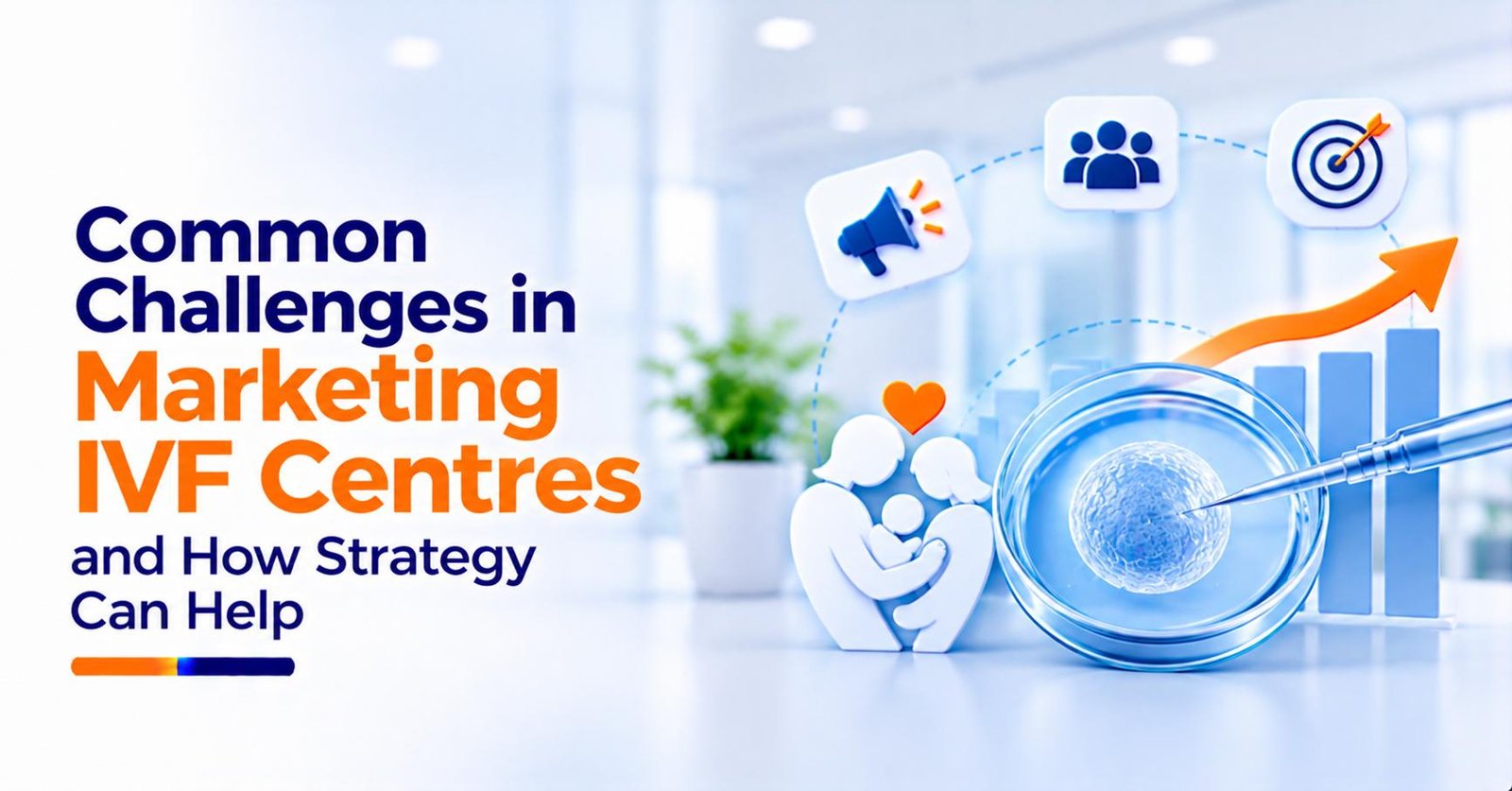
Marketing an IVF centre requires a thoughtful approach because fertility treatment is a deeply personal healthcare decision. People exploring IVF services often spend considerable time researching treatment options, understanding procedures, comparing specialists, and evaluating different clinics before contacting a centre.
Unlike many other healthcare services, fertility care involves emotional concerns, personal expectations, privacy, and important financial considerations. A general promotional approach may not be enough to build trust or encourage meaningful enquiries.
IVF centres need to communicate their services clearly, provide reliable information, maintain a professional online presence, and make it easier for people to connect with the right specialists.
This is where a well-planned digital strategy becomes important.
Through search engine optimization, educational content, local SEO, paid advertising, social media marketing, and website optimization, fertility centres can improve their online visibility and create better opportunities for relevant enquiries.
At World SEO Services, healthcare digital marketing focuses on helping hospitals, clinics, and specialised healthcare brands strengthen their digital presence through SEO, content marketing, PPC advertising, social media marketing, and lead generation.
In this article, we will explore the common challenges IVF centres face while marketing their services and how a structured digital strategy can help address them.
1. Understanding Why IVF Centre Marketing Is Different
Before discussing the challenges, it is important to understand why IVF marketing requires a specialised approach.
People searching for fertility treatment may have several questions before choosing a centre:
- What fertility services does the centre provide?
- Which specialists are available?
- What does the IVF process involve?
- What diagnostic tests may be required?
- How can someone schedule a consultation?
- What information should they understand before starting treatment?
- Where is the centre located?
These questions reflect the research involved in choosing fertility care.
IVF centres also need to communicate carefully. Marketing messages should be informative, respectful, and realistic rather than relying on emotional pressure or unrealistic treatment promises.
A successful digital strategy should therefore focus on three important areas:
- Making accurate fertility information easy to find.
- Building confidence through transparent communication.
- Creating convenient ways for interested individuals to contact the centre.
2. Common Marketing Challenges Faced by IVF Centres
A. High Competition in the Fertility Healthcare Market
Many cities have multiple fertility clinics and IVF centres offering similar services. When people search online for fertility treatment, they may find several providers competing for attention.
This creates a visibility challenge.
An IVF centre may have experienced doctors, modern facilities, and a range of fertility services, but potential patients may not discover it if its website and local search presence are weak.
How digital strategy can help:
Search engine optimization can improve the centre’s visibility for relevant searches.
An SEO strategy may include:
- Researching fertility-related search terms.
- Creating dedicated pages for IVF and other fertility services.
- Optimising doctor profile pages.
- Improving website structure.
- Publishing educational fertility content.
- Strengthening local search visibility.
For example, an IVF centre in Jaipur may create useful service pages targeting searches related to IVF treatment, fertility consultations, and reproductive health services in its service area.
The objective is to make relevant information easier to discover when people actively search for it.
B. Building Trust Before the First Consultation
Trust is particularly important in fertility healthcare.
People may be researching treatment for the first time and may not fully understand the available procedures. They often want to know about the doctors, treatment approach, facilities, and consultation process before contacting a centre.
A website that only lists services without providing meaningful information may leave important questions unanswered.
How digital strategy can help:
A centre can build a more informative online presence through:
- Detailed doctor profiles.
- Clear descriptions of fertility services.
- Information about treatment procedures.
- Centre and facility information.
- Educational blogs.
- Frequently asked questions.
- Transparent consultation information.
Doctor profiles should include relevant qualifications, specialisations, and professional experience that have been verified by the centre.
The website should communicate what visitors can expect without making unsupported claims about treatment outcomes.
C. Difficulty Reaching the Right Audience
Not every person searching for general health information is ready to contact an IVF centre.
Some people may be exploring fertility topics, while others may be actively looking for a specialist or consultation.
Using the same message for every audience can reduce the relevance of marketing communication.
How digital strategy can help:
Content and campaign planning should consider different stages of the research process.
For example:
- Awareness stage: General information about fertility health and reproductive care.
- Consideration stage: Explanations of IVF procedures, consultations, and available services.
- Decision stage: Doctor information, centre location, appointment details, and contact options.
This approach helps the centre provide useful information according to what visitors may be looking for.
D. Limited Online Visibility for Individual Fertility Services
Some IVF centres create one general services page that mentions every treatment and procedure.
Although this may provide an overview, it may not answer specific search queries effectively.
People looking for information about IVF, IUI, fertility testing, male infertility evaluation, or other services may need more detailed explanations.
How digital strategy can help:
Create dedicated pages for relevant services offered by the centre.
Each page should explain:
- What the service involves.
- Who may be evaluated for it.
- How the process generally works.
- What consultation or assessment may involve.
- Which specialist or department handles the service.
- How to request further information.
All medical descriptions should be reviewed by qualified professionals.
Dedicated service pages also help search engines understand the different services offered by the centre.
E. Managing Sensitive Fertility-Related Communication
Fertility is a personal subject, and people may not feel comfortable discussing their concerns through public social media comments or generic promotional messages.
Marketing communication that feels too aggressive, intrusive, or emotionally insensitive can damage trust.
How digital strategy can help:
IVF centres should adopt a privacy-conscious communication approach.
Useful practices include:
- Providing secure and convenient enquiry options.
- Using respectful language in advertisements.
- Avoiding assumptions about someone’s fertility situation.
- Giving people control over communication preferences.
- Limiting access to sensitive enquiry information.
- Training enquiry teams to respond with empathy.
For example, instead of using pressure-based messaging, an advertisement can invite people to learn about available fertility consultations and contact the centre for further information.
F. Generating Website Traffic but Receiving Few Enquiries
An IVF centre may receive visitors through SEO, social media, or paid advertisements but still struggle to generate relevant enquiries.
This can happen when the website does not clearly explain the next step.
Visitors may be unable to find contact details, understand the consultation process, or identify the appropriate service page.
How digital strategy can help:
Improve the website experience and make important actions easier to find.
Consider adding:
- Clear appointment enquiry buttons.
- Click-to-call options.
- Simple enquiry forms.
- Doctor consultation information.
- Department contact details.
- Mobile-friendly navigation.
- Clear explanations of what happens after submitting an enquiry.
Forms should request only the information needed at that stage. Sensitive medical details should be collected through appropriate secure channels rather than general marketing forms.
G. Difficulty Standing Out on Social Media
Many healthcare brands publish similar social media content, such as festival greetings, service promotions, and general awareness posts.
If an IVF centre publishes only promotional creatives, its content may not answer the questions that people are researching.
How digital strategy can help:
Develop a social media content plan that balances education, professional information, and centre updates.
Possible content categories include:
Educational Content
- General fertility awareness.
- IVF procedure explanations.
- Common fertility-related questions.
- General information about reproductive health.
Doctor-Focused Content
- Specialist introductions.
- Professional interviews.
- Educational videos.
- Answers to general treatment questions.
Centre Information
- Available services.
- Consultation procedures.
- Facility introductions.
- Appointment information.
Awareness Campaigns
- Fertility awareness initiatives.
- Reproductive health education.
- Relevant healthcare observances.
Content should avoid fear-based messaging, guaranteed outcomes, and statements that could create unrealistic expectations.
H. Difficulty Managing Online Reviews and Reputation
People often research a healthcare provider’s reputation before deciding to contact the centre.
Online reviews, ratings, and the way an organisation responds to feedback can influence how visitors perceive its professionalism.
However, managing reviews can be challenging, particularly when feedback involves sensitive treatment experiences.
How digital strategy can help:
IVF centres can establish a structured online reputation management process.
This may include:
- Monitoring reviews across relevant platforms.
- Encouraging honest feedback without pressure.
- Responding professionally to general concerns.
- Addressing complaints through appropriate internal channels.
- Avoiding the disclosure of patient information in public replies.
- Keeping Google Business Profile information accurate.
Responses should never confirm or reveal an individual’s treatment history or patient status.
I. Limited Understanding of Marketing Performance
IVF centres may invest in SEO, Google Ads, Meta Ads, and social media marketing without having a clear picture of which activities contribute to relevant enquiries.
Looking only at impressions, clicks, or website traffic does not provide a complete view of marketing performance.
How digital strategy can help:
Set up structured tracking and monthly reporting.
Useful metrics may include:
- Organic website clicks.
- Search impressions.
- Traffic to fertility service pages.
- Google Ads expenditure.
- Campaign conversion events.
- Enquiries by source.
- Relevant consultation requests.
- Cost per enquiry.
- Appointment outcomes, where reliably tracked.
A CRM or enquiry management system can help connect marketing sources with follow-up activities.
Reports should use aggregated information wherever possible and avoid exposing sensitive patient data.
3. Digital Marketing Strategies That Can Help IVF Centres Grow Their Online Presence
After understanding the common challenges, IVF centres can build a strategy around the channels that support their goals.
A. Search Engine Optimisation for IVF Centres
SEO helps improve the visibility of a centre’s website in unpaid search results.
A specialised SEO strategy can include:
Keyword Research: Identify relevant search terms related to IVF treatment, fertility specialists, consultations, and services offered by the centre.
On-Page SEO: Optimise page titles, headings, descriptions, content, and internal navigation.
Technical SEO: Improve website speed, mobile usability, crawlability, indexing, and site structure.
Local SEO: Strengthen the centre’s visibility for location-related searches.
Content SEO: Publish helpful articles that address common fertility-related questions.
Healthcare content should demonstrate appropriate expertise, accuracy, and transparency. Medical claims and treatment information should be reviewed by qualified professionals.
B. Local SEO and Google Business Profile
For an IVF centre serving a particular city or region, local search visibility can be especially valuable.
People may search for fertility specialists or IVF centres near their location.
An optimised Google Business Profile can help visitors find basic information about the centre.
Important activities include:
- Maintaining accurate contact details.
- Updating operating hours.
- Selecting relevant business categories.
- Adding appropriate photographs.
- Keeping service information updated.
- Monitoring reviews.
- Providing accurate website and appointment links.
Local SEO should also include consistent business information across relevant online directories.
C. Google Ads for Relevant Search Visibility
Google Ads can help IVF centres appear for selected search queries through paid advertising.
For example, a centre may consider campaigns related to its consultation services, fertility specialists, or available treatment categories.
However, healthcare advertising requires careful planning.
Before launching campaigns, review applicable advertising policies, local regulations, targeting restrictions, and requirements related to sensitive health information.
A responsible campaign should:
- Use clear and accurate ad copy.
- Direct visitors to relevant landing pages.
- Avoid guaranteed treatment outcomes.
- Avoid misleading success-rate claims.
- Use appropriate conversion tracking.
- Monitor enquiry quality, not just clicks.
The goal should be relevant visibility rather than attracting the largest possible number of visitors.
D. Content Marketing for Patient Education
Content marketing can help IVF centres answer questions people may have while researching fertility care.
Useful content formats include:
- Educational blogs.
- Treatment explanation pages.
- Doctor interviews.
- Frequently asked questions.
- Short informational videos.
- Downloadable general guides.
Potential blog topics include:
- Understanding the IVF Treatment Process.
- Questions to Ask During a Fertility Consultation.
- What Happens During an Initial Fertility Assessment?
- Understanding the Difference Between IVF and IUI.
- How to Prepare for a Consultation With a Fertility Specialist.
Content should be educational rather than diagnostic. It should also avoid implying that one treatment is suitable for everyone.
E. Social Media Marketing for IVF Centres
Social media platforms provide opportunities to share educational information and introduce the centre’s specialists and services.
A balanced content strategy may include:
- General fertility awareness posts.
- Doctor introduction videos.
- Short educational reels.
- Frequently asked questions.
- Centre information.
- Relevant health awareness campaigns.
Social media communication should respect privacy and avoid encouraging people to share sensitive medical information publicly.
F. Website Optimisation and Landing Pages
The website should make it easy for visitors to understand the centre’s services and find relevant contact information.
Important website elements include:
- Dedicated fertility service pages.
- Detailed doctor profiles.
- Clear consultation information.
- Mobile-friendly layouts.
- Simple navigation.
- Visible contact options.
- Secure enquiry processes.
- Accurate and regularly updated information.
For paid campaigns, dedicated landing pages can help align the advertisement with the information visitors expect to find.
4. How to Build a Digital Marketing Funnel for an IVF Centre
A digital marketing funnel helps organise communication according to the visitor’s research stage.
A practical approach includes three stages.
Stage 1: Awareness
At this stage, people may be looking for general information about fertility and reproductive health.
Suitable activities include:
- Educational blog articles.
- Informational social media posts.
- General awareness videos.
- Search visibility for relevant educational topics.
The objective is to provide useful, accessible information.
Stage 2: Consideration
Visitors may begin comparing fertility services, specialists, and centres.
Useful content includes:
- Detailed treatment information.
- Doctor profiles.
- Centre facilities.
- Consultation process explanations.
- FAQs.
- Educational videos reviewed by qualified professionals.
The objective is to help people understand the centre’s services and make informed enquiries.
Stage 3: Enquiry and Consultation
At this stage, visitors may be ready to contact the centre.
Make the next step clear through:
- Appointment enquiry forms.
- Click-to-call options.
- Consultation information.
- Contact details.
- Clear directions.
- Appropriate follow-up processes.
The objective is to make contacting the centre straightforward without applying unnecessary pressure.
5. Important Website Pages Every IVF Centre Should Consider
A well-structured website can support both search visibility and visitor understanding.
Depending on the services offered, an IVF centre may benefit from the following pages:
| Website Page | Purpose |
|---|---|
| Home Page | Introduces the centre and its main services |
| About Us | Explains the centre’s background and approach |
| Doctor Profiles | Shares verified specialist qualifications and experience |
| IVF Treatment | Explains the IVF process and relevant information |
| Fertility Services | Describes available treatments and assessments |
| Facilities | Introduces relevant facilities and support services |
| Blogs | Answers general fertility-related questions |
| FAQs | Addresses common service and consultation questions |
| Contact Us | Provides location and enquiry information |
Each page should have a clear purpose and contain accurate, useful information.
6. Common IVF Marketing Mistakes to Avoid
Even when a centre invests in digital marketing, certain mistakes can reduce the quality of its online presence.
A. Promising Guaranteed IVF Success
Treatment outcomes vary depending on individual medical circumstances.
Marketing content should not promise guaranteed pregnancies, fixed success rates, or certain results.
Use accurate, appropriately qualified information approved by the centre’s medical team.
B. Publishing Only Promotional Content
A social media profile filled entirely with service advertisements may not provide enough value to people researching fertility care.
Include educational content, specialist information, and useful service explanations.
C. Ignoring Mobile Website Experience
Many visitors use smartphones to search for healthcare information.
A website with difficult navigation, slow loading, or unclear contact options may create unnecessary friction.
Test the website regularly on different screen sizes.
D. Using Emotionally Pressuring Advertisements
Fertility decisions can involve personal and emotional concerns.
Avoid fear-based language, intrusive assumptions, or messaging that makes people feel pressured to seek treatment.
E. Ignoring Patient Privacy
Do not disclose patient details, treatment information, or personal experiences without appropriate authorisation and consent.
Marketing teams should follow applicable privacy requirements and internal data-handling policies.
F. Measuring Success Only Through Clicks
Clicks and impressions do not necessarily represent meaningful enquiries.
Review the complete journey from website visit to relevant enquiry and consultation, where reliable data is available.
7. How World SEO Services Can Support IVF Centre Digital Marketing
A specialised digital marketing approach can help IVF centres manage different online channels through a coordinated strategy.
World SEO Services provides digital marketing solutions that can support healthcare organisations in improving their online visibility and managing their marketing activities.
These services include:
SEO Marketing: Improving website structure, content relevance, technical performance, and organic search visibility.
Content Marketing: Planning educational blogs, service pages, and other useful healthcare content.
Social Media Marketing: Managing educational posts, awareness campaigns, and professional brand communication.
PPC Advertising: Planning and monitoring paid campaigns in line with applicable healthcare advertising policies.
Local SEO: Improving business information and local search visibility.
Web Development: Creating user-friendly websites with clear service information and convenient enquiry options.
Lead Generation: Supporting enquiry tracking and improving the process through which interested visitors connect with the centre.
The right combination depends on the centre’s location, services, audience, website condition, and marketing objectives.
Conclusion
Marketing an IVF centre requires more than running advertisements or publishing regular social media posts. Fertility healthcare involves personal decisions, sensitive communication, and careful research. Therefore, digital marketing should focus on accurate information, trust, privacy, and convenient access to relevant services.
Challenges such as high competition, limited online visibility, low enquiry conversion, reputation management, and unclear campaign performance can be addressed through a structured digital strategy.
SEO can improve organic visibility, local SEO can strengthen location-based discovery, content marketing can answer common questions, and paid campaigns can support relevant search visibility. A well-designed website and organised enquiry process can further improve the visitor experience.
With a coordinated approach, IVF Centre Digital Marketing can become more organised, informative, and aligned with the centre’s long-term objectives.
World SEO Services helps healthcare brands strengthen their digital presence through SEO, content marketing, PPC advertising, social media marketing, website development, and lead generation. For IVF centres, combining these services with responsible healthcare communication can help build a stronger and more informative online presence.
Frequently Asked Questions
1. Why is digital marketing important for IVF centres?
Digital marketing helps IVF centres improve online visibility, share educational fertility information, introduce specialists, and make it easier for interested individuals to find relevant services and contact the centre.
2. Which digital marketing channels are useful for IVF centres?
Important channels include SEO, local SEO, Google Ads, content marketing, social media marketing, and website optimisation. The right combination depends on the centre’s services, location, audience, and objectives.
3. How can an IVF centre improve its visibility on Google?
An IVF centre can improve its search visibility through keyword research, dedicated treatment pages, technically sound website development, helpful medical content, and an accurate Google Business Profile. SEO improvements require ongoing monitoring and do not guarantee specific rankings.
4. What type of content should an IVF centre publish on social media?
IVF centres can share general fertility awareness information, doctor introductions, educational videos, treatment explanations, FAQs, and centre updates. Content should be medically reviewed, respectful, and free from unrealistic treatment promises.
5. How can an IVF centre generate more relevant enquiries through digital marketing?
Centres can improve relevant enquiries by targeting appropriate search intent, creating informative service pages, using clear contact options, improving mobile website usability, and tracking enquiry sources. They should also maintain a professional and privacy-conscious follow-up process.