
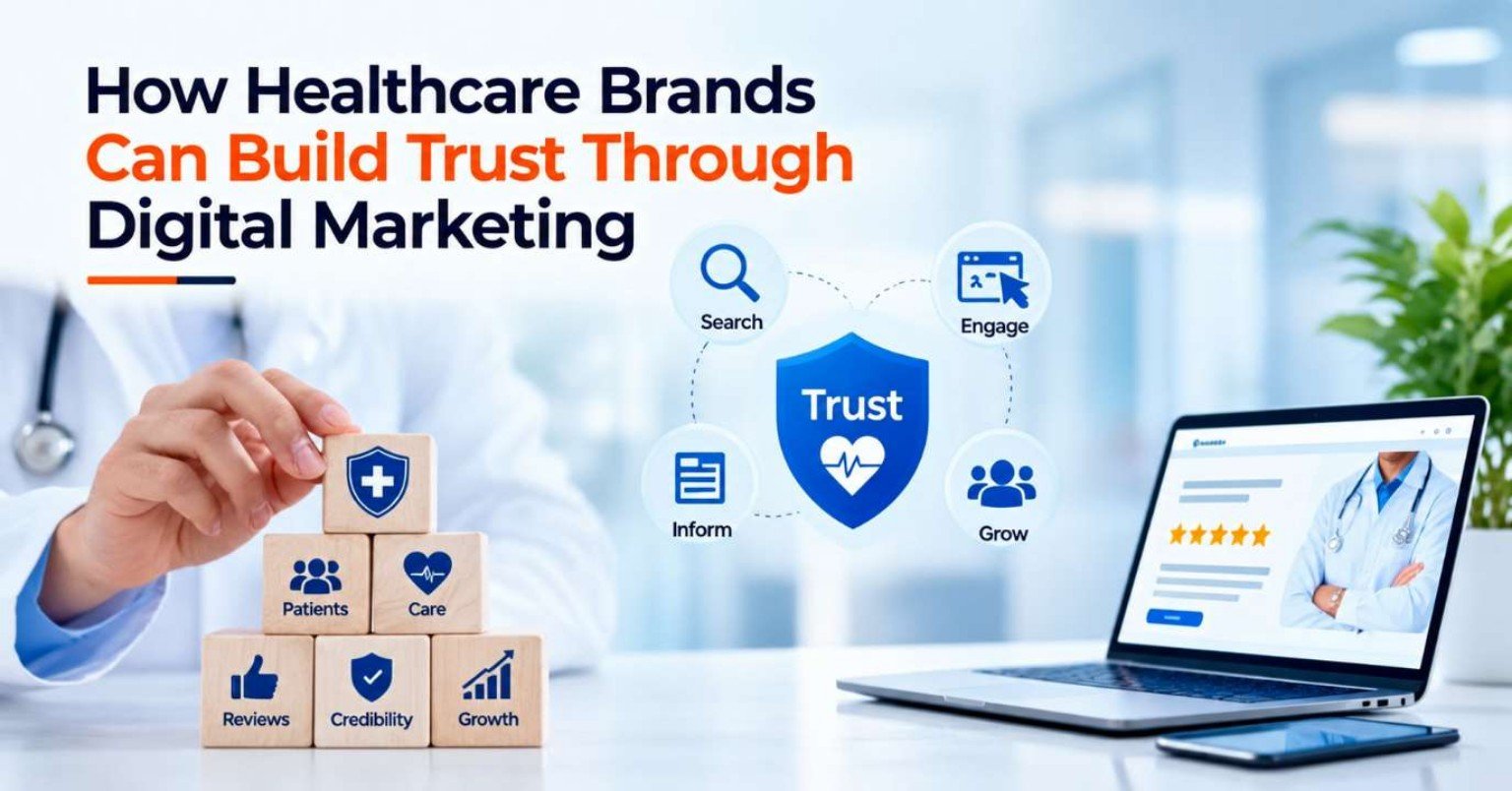
Healthcare marketing is different from marketing many other products or services.
When someone searches for a doctor, hospital, clinic, diagnostic centre, fertility centre, dental practice, or other healthcare provider, they are not simply comparing products. They are often looking for information, professional expertise, safety, convenience, and confidence before deciding what to do next.
This makes trust a central part of healthcare digital marketing.
A strong online presence can help a healthcare brand communicate who it is, what services it provides, who delivers those services, and where people can find reliable information. At the same time, unclear claims, outdated information, fake reviews, poor website experiences, or aggressive advertising can weaken confidence.
The World Health Organization has highlighted that digital health initiatives need attention to trust, privacy, security, governance, inclusivity, and user experience.
For healthcare businesses in India, digital marketing should therefore go beyond generating clicks or website traffic. It should help people understand the organization and make informed decisions.
This article explains practical ways healthcare brands can build trust through digital marketing without relying on exaggerated claims or promotional messaging.
Why Trust Matters in Healthcare Digital Marketing
Trust influences how people evaluate healthcare information and providers online.
A potential patient may ask:
- Is this healthcare provider genuine?
- Are the doctors properly qualified?
- Can I understand the services clearly?
- Is the information on this website reliable?
- Are the reviews authentic?
- Is my personal information handled responsibly?
- Can I easily contact the clinic?
- Are the claims supported by credible information?
A healthcare website that answers these questions clearly can create a stronger foundation for online communication.
WHO has also emphasized that patient safety and quality of care are important to maintaining public trust in healthcare systems.
Digital marketing cannot create clinical trust by itself. Instead, it can communicate the real strengths, information, processes, and standards of a healthcare organization more clearly.
1. Start With Accurate and Useful Healthcare Information
One of the simplest ways to build trust online is to provide useful information.
Healthcare brands can create content around:
- Services
- Medical specialties
- Common patient questions
- Procedures
- Doctor expertise
- Preparation information
- Frequently asked questions
- Appointment processes
- Clinic facilities
The content should be written for people first.
For example, instead of creating an article simply to target the keyword “cardiologist in Jaipur,” a healthcare brand could explain:
- What a cardiologist does
- Which services are available
- When someone may consider consulting a specialist
- How to prepare for a consultation
- Where the clinic is located
- How to book an appointment
The keyword supports the content, rather than controlling it.
2. Show Who Is Behind the Healthcare Brand
Healthcare is a people-driven industry.
A website should make it easy for visitors to understand who provides the services.
Doctor and specialist profiles can include:
- Name
- Specialty
- Qualifications
- Professional experience
- Areas of practice
- Relevant professional affiliations
- Clinic location
- Consultation information
The information should be accurate and current.
Avoid vague statements such as “world’s best doctor” or unsupported superlatives. Specific information is generally more useful to users than exaggerated promotional language.
A clear professional profile can help visitors understand the expertise available before contacting the organization.
3. Make Your Website Transparent
A healthcare website is often one of the first places people evaluate a brand.
Important information should not be hidden behind complicated navigation.
A trustworthy healthcare website should make it easy to find:
- About the organization
- Doctors
- Services
- Locations
- Contact details
- Appointment options
- Working hours
- Frequently asked questions
- Privacy information
If a visitor has to search through several pages just to find a phone number or clinic address, the experience can create unnecessary friction.
Website transparency is therefore both a trust factor and a user-experience consideration.
4. Keep Healthcare Content Updated
Outdated healthcare information can reduce confidence.
Healthcare brands should periodically review important pages for:
- Outdated service details
- Old doctor information
- Incorrect contact details
- Changed clinic timings
- Old statistics
- Broken links
- Outdated medical references
- Services that are no longer available
A content review process can help ensure that important information remains relevant.
The World Health Organization has highlighted the importance of trustworthy, accurate health information, including efforts to address misinformation and support health literacy.
For Healthcare Marketing Company India strategies, content maintenance should therefore be considered part of ongoing digital marketing rather than a one-time publishing activity.
5. Use Evidence and Credible Sources Where Appropriate
Healthcare content should not depend entirely on promotional statements.
When discussing medical facts, statistics, research, or public-health information, appropriate credible sources can add context.
Depending on the topic, these may include:
- Government health organizations
- Recognized medical institutions
- Professional medical organizations
- Peer-reviewed research
- Established public-health authorities
The objective is not to overload every page with references.
It is to make important claims easier to understand and evaluate.
For example, a healthcare article discussing a public-health recommendation can link to the relevant authoritative source instead of presenting the recommendation as an unsupported marketing statement.
6. Build Trust Through Patient-Friendly Content
Medical language can be difficult for people without healthcare backgrounds.
Healthcare brands can improve trust by explaining complex topics in simple language.
Instead of filling an article with unexplained medical terminology, use:
- Short paragraphs
- Clear headings
- Definitions
- Bullet points
- Frequently asked questions
- Step-by-step explanations
- Relevant examples
The objective is not to simplify information to the point of being inaccurate.
It is to make useful information easier to understand.
This approach can also support accessibility and health literacy.
7. Use Patient Reviews Responsibly
Reviews can influence how people evaluate local healthcare providers.
However, reviews should be genuine.
Healthcare brands should avoid:
- Fake reviews
- Purchased reviews
- Fabricated testimonials
- Manipulated ratings
- Reviews presented without appropriate context
Google’s guidance for review-related structured data specifically warns against fake or undisclosed incentivized reviews.
Businesses can encourage genuine feedback and respond professionally to legitimate reviews.
Google also provides businesses with the ability to respond to reviews, subject to its policies.
8. Respond to Reviews Professionally
Not every review will be positive.
A negative review can become an opportunity to demonstrate professionalism if the response is appropriate.
A healthcare business should avoid:
- Arguing with the reviewer
- Revealing private patient information
- Making personal accusations
- Sharing confidential details
- Using defensive or aggressive language
A suitable response can acknowledge the feedback, remain respectful, and invite the person to continue the discussion through an appropriate private channel when necessary.
The goal is not to “win” an online argument.
It is to demonstrate that the organization takes feedback seriously.
9. Protect Patient Privacy
Privacy is one of the most important elements of digital trust in healthcare.
Healthcare businesses may deal with highly sensitive personal and health-related information.
Digital marketing activities should therefore be designed carefully around privacy and appropriate data handling.
The National Digital Health Blueprint for India identifies privacy, security, consent, and patient safety among important areas for digital health standards.
Marketing teams should be especially careful with:
- Patient photographs
- Testimonials
- Before-and-after images
- Treatment stories
- Personal health information
- Lead forms
- Appointment information
- Retargeting audiences
- Messaging platforms
A patient’s story should never become marketing material simply because it is available.
Consent, privacy, and applicable legal and organizational requirements should be considered before publishing or using patient information.
10. Be Transparent About Data Collection
If a website collects personal information through a form, users should be able to understand what information is being requested and why.
For example, an appointment form may ask for:
- Name
- Phone number
- Preferred appointment information
Only information necessary for the stated purpose should be requested where appropriate.
For digital health applications and integrations, transparency becomes even more important. Google’s health-data guidance emphasizes clear disclosure about what health data is accessed, collected, used, or shared.
Healthcare marketing teams should coordinate with relevant technical, privacy, compliance, and legal teams when handling sensitive data.
11. Create a Strong Local Search Presence
For clinics and hospitals with physical locations, local search can be an important trust touchpoint.
Patients may search:
- Hospital near me
- Dentist in Jaipur
- IVF centre in Delhi
- Dermatologist near me
- Diagnostic centre in Udaipur
A complete and accurate Google Business Profile can help users find essential information such as location, hours, phone number, website, and reviews.
The information should match the actual business.
Incorrect hours, outdated addresses, duplicate listings, or misleading categories can create confusion.
Local SEO should therefore focus not only on visibility but also on accurate information.
12. Make Contact Information Easy to Verify
Trust can weaken when visitors cannot determine how to contact a healthcare organization.
Make important details easy to find:
- Phone number
- Address
- Email where appropriate
- Appointment link
- Working hours
- Emergency information where applicable
- Directions
- Contact form
The information should be consistent across important digital platforms.
For healthcare businesses, this is particularly important because a user may need to contact the organization quickly after discovering it through search.
13. Use Social Media to Educate, Not Just Promote
Healthcare social media should not become a continuous stream of advertisements.
Instead, brands can use platforms to share:
- Educational posts
- Doctor introductions
- Healthcare awareness content
- Facility information
- General wellness information
- Frequently asked questions
- Service explanations
- Public-health information
- Behind-the-scenes professional content where appropriate
A useful social media presence can help people understand the organization before they decide to contact it.
The tone should remain informative and responsible.
14. Avoid Fear-Based Healthcare Marketing
Fear can attract attention, but it is not a sustainable foundation for trust.
Avoid messaging such as:
- “Ignore this and your health will be ruined”
- “You are definitely at risk”
- “This treatment will save you”
- “Guaranteed results”
- “Only one solution works”
Healthcare communication should provide useful information without unnecessarily alarming people.
Marketing should not replace professional medical consultation or encourage people to make healthcare decisions based solely on promotional content.
15. Use Paid Advertising Transparently
Google Ads, Meta Ads, and other paid channels can help healthcare businesses reach relevant audiences.
But paid advertising should be clearly distinguishable from organic information.
Ad copy should accurately represent:
- The service
- The provider
- The location
- The offer, if applicable
- The destination page
Do not use an advertisement to promise something the landing page or healthcare organization cannot genuinely provide.
WHO has noted that digital marketing raises additional challenges around targeting and personal data, reinforcing the need for careful approaches to digital advertising.
16. Build Trust With Consistent Brand Communication
Imagine that a clinic’s website says one thing, its Google Business Profile says another, and its social media page contains outdated information.
Even if each individual platform looks professional, the overall brand experience can become confusing.
Healthcare brands should aim for consistency in:
- Business name
- Services
- Location
- Doctor information
- Contact details
- Brand messaging
- Visual identity
- Appointment process
Consistency makes it easier for users to verify that different online profiles belong to the same organization.
17. Use Visual Content Carefully
Healthcare brands can use:
- Doctor photographs
- Facility photographs
- Educational diagrams
- Procedure explanations
- Short educational videos
- Infographics
But visuals should represent reality.
Avoid misleading stock images that imply facilities, equipment, staff, or patient experiences that the organization does not actually have.
For doctor and facility photographs, current and authentic images can provide useful context.
18. Use Video to Explain Healthcare Topics
Video can make complicated information easier to understand.
Healthcare brands can create videos such as:
- Doctor introductions
- Service explanations
- Clinic walkthroughs
- Frequently asked questions
- General healthcare education
- Appointment process explanations
Videos should not turn medical information into sensational content.
A short, clear explanation from an appropriate healthcare professional can often communicate more effectively than a highly promotional video.
19. Strengthen Reputation Management
Digital reputation management is broader than responding to negative reviews.
It can include monitoring:
- Google reviews
- Search results
- Social media mentions
- Healthcare directories
- Brand searches
- Website information
- Public feedback
The purpose is not to remove every negative comment.
It is to understand how the organization is being represented online and respond appropriately where action is possible.
A legitimate complaint may also reveal an operational problem that marketing alone cannot solve.
20. Align Marketing With the Real Patient Experience
This is one of the most important principles of healthcare digital marketing.
Marketing can communicate what a healthcare organization actually provides.
It cannot permanently hide a poor patient experience.
If advertisements promise:
“Easy appointment booking”
but the booking process takes multiple phone calls, the digital message and actual experience conflict.
Similarly, if a website promises quick responses but enquiries regularly remain unanswered, marketing cannot solve the underlying issue.
Trust becomes stronger when:
Marketing promise = actual experience.
21. Use AI Carefully in Healthcare Marketing
AI can support healthcare marketing through:
- Content research
- Topic discovery
- Content organization
- Search analysis
- Drafting support
- Data analysis
- Personalization workflows
But healthcare information requires human oversight.
WHO has emphasized that AI in healthcare needs appropriate governance, ethics, safety, equity, and trust considerations.
AI-generated healthcare content should therefore be reviewed for:
- Accuracy
- Context
- Outdated information
- Unsupported claims
- Medical terminology
- Privacy concerns
- Brand consistency
AI can support the workflow, but it should not replace appropriate healthcare expertise and editorial review.
22. Build an AEO-Friendly Trust Strategy
People increasingly ask complete questions through search engines and AI-powered search experiences.
Healthcare brands can prepare by creating content that directly answers questions such as:
- What does a cardiologist do?
- When should someone consult a dermatologist?
- What happens during a dental consultation?
- How can I prepare for an MRI?
- What services does this clinic provide?
Use:
- Clear headings
- Direct answers
- Concise explanations
- Supporting details
- FAQ sections
- Credible references where appropriate
The goal should not be to manipulate AI systems.
It should be to make useful information easy to understand, verify, and retrieve.
23. Make the Website Technically Trustworthy
A healthcare website should also function properly.
Review:
- HTTPS
- Mobile usability
- Page speed
- Broken links
- Forms
- Appointment buttons
- Navigation
- Accessibility
- Privacy pages
- Contact information
A visitor may hesitate to submit an enquiry if a website looks outdated, contains broken pages, or behaves unpredictably.
Technical quality is therefore part of the overall digital experience.
24. Show Real Information Instead of Empty Marketing Claims
Compare these two statements:
“We provide world-class healthcare with the best doctors.”
versus:
“Our cardiology department provides consultations, diagnostic services, and specialist care at our Jaipur facility.”
The second statement gives users something concrete to understand.
Healthcare brands can build credibility by communicating:
- What they offer
- Where they offer it
- Who provides it
- How the process works
- How users can contact them
Specific information generally gives users more value than unsupported superlatives.
25. Create Trust Across the Entire Patient Search Journey
Trust should not begin only when someone reaches the appointment page.
It can be built at every stage.
Stage 1: Discovery
A person finds an educational article through search.
Trust opportunity: Clear, useful information.
Stage 2: Provider Research
The person visits the healthcare website.
Trust opportunity: Doctor profiles, services, facilities, and transparent information.
Stage 3: Local Evaluation
The person checks Google Maps or local listings.
Trust opportunity: Accurate location, hours, reviews, and contact details.
Stage 4: Decision
The person considers contacting the provider.
Trust opportunity: Simple appointment process and clear expectations.
Stage 5: Post-Interaction
The patient provides feedback.
Trust opportunity: Professional review management and ongoing communication.
This creates a consistent digital experience rather than isolated marketing campaigns.
26. Measure Trust-Related Digital Marketing Signals
Not everything related to trust can be reduced to one metric.
Healthcare brands can monitor:
- Organic search visibility
- Branded search activity
- Website engagement
- Service-page visits
- Appointment enquiries
- Phone calls
- Google Business Profile interactions
- Review volume
- Review sentiment
- Social engagement
- Content performance
- Returning visitors
- Conversion rates
The objective is not to assume that a single metric represents trust.
Instead, look for patterns across multiple channels.
For example, increasing qualified website visits combined with more service enquiries and consistent engagement may provide useful evidence that the digital presence is reaching the right audience.
27. How World SEO Services Can Help Healthcare Brands Build Digital Trust
At World SEO Services, healthcare digital marketing can be approached as more than a traffic-generation exercise.
A trust-focused strategy can bring together:
- Healthcare SEO
- Content marketing
- Local SEO
- Google Business Profile optimization
- Healthcare website optimization
- Social media marketing
- Paid search
- Reputation management
- AEO-focused content
- Conversion optimization
- Search performance analysis
The focus should be on communicating genuine expertise and useful information while making the digital journey easier for potential patients.
For a Healthcare Marketing Company India strategy, this can also include adapting content and local search efforts to different cities, specialties, patient questions, and healthcare business models.
The exact strategy should depend on the organization’s services, audience, locations, existing digital presence, and business goals.
A Practical Healthcare Trust-Building Checklist
Before publishing or promoting healthcare content, ask:
- Is the information accurate?
- Is the source or expertise clear where appropriate?
- Are doctor details current?
- Are service descriptions accurate?
- Is contact information easy to find?
- Is the Google Business Profile accurate?
- Are reviews genuine?
- Are review responses professional?
- Is patient privacy protected?
- Are testimonials used with appropriate consent?
- Are advertising claims realistic?
- Does the website work well on mobile?
- Are appointment processes clear?
- Is social media providing useful information?
- Is AI-generated content reviewed appropriately?
- Are important pages regularly updated?
- Does the marketing message match the real patient experience?
Conclusion
Building trust through digital marketing is not about making a healthcare brand appear perfect.
It is about making the organization easier to understand, verify, and engage with.
Healthcare brands can strengthen digital trust by publishing useful information, showing genuine professional expertise, maintaining accurate business details, managing reviews responsibly, protecting patient privacy, using transparent advertising, and creating a website that delivers a consistent experience.
Trust also depends on what happens beyond marketing.
If the online experience promises convenient appointments, accurate information, professional communication, or specific services, the actual patient experience should support those expectations.
For healthcare businesses in India, this makes digital marketing a combination of visibility, information, transparency, reputation, privacy, and user experience.
World SEO Services can help healthcare brands build this digital presence through a combination of SEO, content, local search, social media, reputation management, paid campaigns, and conversion-focused website strategies.
The objective should not simply be to get more people to see a healthcare brand.
It should be to give the right people enough clear, credible, and useful information to understand the organization and take an informed next step.
FAQs
1. Why is trust important in healthcare digital marketing?
Healthcare decisions often involve sensitive and personal considerations. Trust helps people evaluate the information, professionals, services, and organization they find online. Accurate content, transparent communication, genuine reviews, professional profiles, and a reliable website can contribute to a stronger digital experience.
2. How can a healthcare website build trust?
A healthcare website can build trust by providing accurate service information, current doctor profiles, clear contact details, transparent appointment processes, useful educational content, privacy information, authentic images, and credible references where appropriate.
3. Do online reviews affect healthcare brand reputation?
Reviews can influence how people perceive a healthcare provider, particularly in local search. Healthcare organizations should encourage genuine feedback and respond professionally. Fake, fabricated, or misleading reviews should be avoided.
4. How should healthcare brands use social media to build trust?
Healthcare brands can use social media to provide educational information, introduce professionals, explain services, answer common questions, share general health awareness content, and communicate authentic aspects of the organization. Content should remain accurate and avoid exaggerated or fear-based claims.
5. Can digital marketing guarantee trust or patient conversions?
No. Digital marketing can help communicate information, improve visibility, and create a clearer online experience, but it cannot guarantee that every visitor will trust a healthcare provider or become a patient. Trust also depends on the quality, safety, communication, and actual experience delivered by the healthcare organization.