
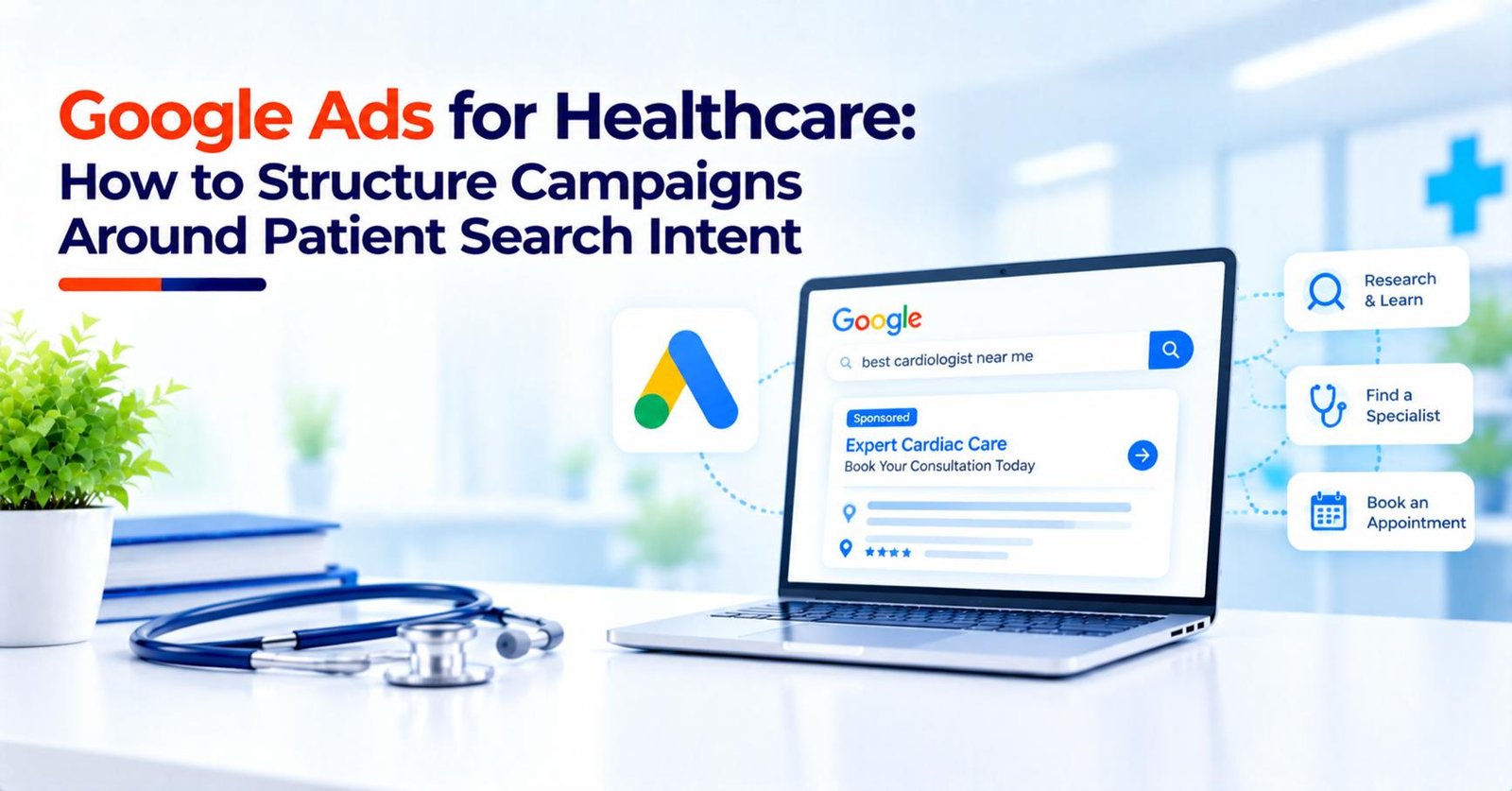
When people search online for healthcare services, their needs can vary considerably. One person may be looking for a hospital’s location, another may be researching a medical specialty, while someone else may simply want to understand a health-related term.
For healthcare organizations, understanding these differences is important when planning paid search campaigns. Showing the same advertisement to every searcher may waste advertising budget and lead users to information that does not match their needs.
Google Ads can help eligible healthcare businesses reach relevant audiences through paid search placements. However, effective campaign management requires more than selecting keywords and setting a budget. Advertisers need to understand search intent, organize campaigns logically, create relevant advertisements, and direct users to appropriate landing pages.
A well-planned Healthcare PPC Advertising Services strategy can help healthcare organizations align paid search campaigns with the information people are looking for while maintaining responsible advertising practices.
This guide explains how to structure Google Ads campaigns around patient search intent, improve campaign relevance, and measure performance effectively.
What Is Search Intent in Healthcare PPC?
Search intent refers to the reason behind a person’s search query. Understanding this intent helps advertisers determine which keywords, advertisements, and landing pages are most relevant to a search.
In healthcare marketing, search intent often falls into several broad categories.
- Informational intent: The person wants to learn about a healthcare topic.
- Service-related intent: The person wants to understand a particular medical service.
- Local intent: The person is looking for a healthcare facility in a specific area.
- Navigational intent: The person wants to find a particular hospital, clinic, or healthcare brand.
These categories can overlap. Someone searching for a medical specialty in a particular city may want both educational information and details about local facilities.
The purpose of intent-based campaign planning is to understand these differences and create a more relevant advertising experience.
Why Search Intent Matters for Healthcare Google Ads
Search intent influences which keywords should be targeted, what an advertisement should communicate, and which website page should appear after a click.
When these elements are aligned, users can find information that better matches their original search.
1. Improve Ad Relevance
An advertisement that reflects the subject of a search is more useful than a generic message that could apply to any healthcare organization.
For example, a search related to a hospital’s diagnostic department should ideally lead to relevant, factual information about that department rather than an unrelated general page.
2. Make Better Use of Advertising Budget
Not every healthcare-related search is equally relevant to a campaign’s objective.
Organizing keywords by intent can help advertisers identify unrelated traffic, refine keyword selection, and review whether campaign spending supports the intended outcome.
3. Create a Better Website Experience
When the landing page matches the advertisement, users can more easily find the information they expected.
This can reduce unnecessary navigation and help people understand the healthcare organization’s services, location, and contact options.
These improvements do not guarantee appointments or a particular return on advertising spend. Results depend on several factors, including competition, campaign settings, budget, and website quality.
1. Identify the Main Search Intent Categories
Before creating campaigns, healthcare advertisers should review the search terms relevant to their services and determine what users are likely trying to accomplish.
Informational Searches
These searches focus on learning about a topic rather than necessarily contacting a provider.
Examples may include searches for general explanations of medical terminology or how a diagnostic procedure works.
For these searches, an educational resource may be more appropriate than a service-focused landing page. However, informational keywords should only be included when they fit the campaign objective and comply with applicable advertising policies.
Service-Related Searches
These queries indicate interest in a particular healthcare service or specialty.
The appropriate advertisement should describe the permitted service accurately and direct users to a page that explains it.
Advertisers should avoid unsupported treatment claims, guarantees, and misleading statements about medical outcomes.
Local Searches
Local searches often include a city, locality, or location-related phrase.
These queries may indicate that a user is trying to find a nearby healthcare facility or understand where a service is available.
Where appropriate, campaigns can use geographic targeting and relevant location information to help eligible organizations reach audiences in their service areas.
Brand Searches
Brand searches include the name of a particular healthcare organization.
These searches may require a separate campaign structure from non-brand searches because the user’s goal may be to find a known organization.
Advertisers should also review applicable trademark and platform policies when creating brand-related campaigns.
2. Organize Campaigns Around Clear Objectives
A common campaign planning mistake is placing unrelated healthcare services and search terms into one broad campaign without a clear structure.
A more organized approach begins by defining the campaign objective and identifying which services or search themes belong together.
For example, a healthcare organization might separate campaigns based on:
- Different eligible service categories
- Distinct geographic service areas
- Brand-related and non-brand search terms
- Different campaign objectives
- Separate budget requirements
The best structure depends on the size of the organization, the services being advertised, available budget, and the volume of relevant searches.
Avoid creating too many campaigns simply to make the account appear more detailed. Each campaign should have a meaningful purpose and enough relevant data to support ongoing management.
3. Group Keywords by Search Theme
Within a campaign, ad groups can help organize closely related keywords and advertisements.
For example, an eligible healthcare advertiser may organize keywords around a particular department or service rather than combining unrelated specialties into a single ad group.
A practical keyword grouping process includes:
Step 1: Collect relevant keywords. Research phrases associated with the permitted services being advertised.
Step 2: Review intent. Identify whether the terms indicate informational, local, service-related, or brand-focused searches.
Step 3: Group similar terms. Keep keywords together when they share a clear topic and advertising purpose.
Step 4: Check policy restrictions. Review whether the keywords involve restricted healthcare products, services, or terminology.
Step 5: Monitor search terms. Review the actual queries that trigger advertisements and refine the account where appropriate.
Keyword grouping should support relevance and effective management. It should not become an excuse to target sensitive health interests in ways prohibited by advertising policies.
4. Write Advertisements That Match Search Intent
The advertisement should accurately reflect the service or information that users can expect to find after clicking.
For a local facility search, factual location and contact information may be relevant. For a service-related search, the advertisement should describe the permitted service without making unsupported claims.
Effective healthcare ad copy should be:
- Clear and easy to understand
- Relevant to the intended search theme
- Accurate about the organization and its services
- Consistent with the landing page
- Free from misleading guarantees or exaggerated claims
Healthcare advertisers should avoid language such as guaranteed cures, unsupported claims of being the best, or promises that every person will achieve a particular result.
Google Ads has specific rules for healthcare and medicines, and some services require certification or are restricted in certain locations. Advertisers should review the official Google Ads Healthcare and Medicines policy before launching a campaign. <Cite refs={[“turn347496search0″,”turn347496search1”]}/>
5. Match Each Ad Group With a Relevant Landing Page
The landing page is where users arrive after clicking an advertisement. Its content should match the advertisement’s subject and the likely intent behind the search.
Sending every user to the homepage can make it harder for them to find the information they need.
A relevant landing page may include:
- A clear heading that explains the subject
- Accurate information about the service
- Details about the facility, where appropriate
- Current contact information
- Mobile-friendly navigation
- Readable and accessible content
- Appropriate information about next steps
The landing page must also follow the applicable advertising policies. A compliant advertisement can still encounter problems if the destination page contains prohibited claims or restricted content.
Healthcare organizations should regularly check their landing pages for outdated information, broken links, inconsistent claims, and technical issues.
6. Use Negative Keywords Carefully
Negative keywords can help prevent advertisements from appearing for searches that are unrelated to the campaign’s intended purpose.
For example, a campaign focused on a specific local facility may need to exclude unrelated search themes that consume budget without supporting its objective.
However, negative keyword decisions should be based on actual search-term data and campaign goals. Broad exclusions may unintentionally block useful searches.
Healthcare advertisers must also review the restrictions that apply to their particular service category. Prescription drug terms, fertility-related services, and other regulated topics can have specific platform requirements depending on the location and campaign. <Cite refs={[“turn347496search0″,”turn347496search5”]}/>
The objective is to improve relevance without unnecessarily restricting appropriate traffic.
7. Measure Performance by Campaign Intent
Different search intents may produce different user behaviours. As a result, healthcare campaigns should be evaluated according to their objectives rather than judged by clicks alone.
Useful metrics may include:
- Impressions and clicks
- Click-through rate
- Average cost per click
- Landing page engagement
- Completed enquiry forms
- Calls to official business numbers
- Cost per tracked conversion
For example, a campaign designed to direct users to factual service information may need a different evaluation approach from one designed to generate relevant enquiries.
Conversion tracking should be configured carefully. Healthcare organizations must avoid unnecessarily collecting or sharing sensitive health information through advertising platforms, analytics tools, or tracking parameters.
Performance reports should help identify which campaigns are attracting relevant users and where improvements may be needed.
8. Follow Healthcare Advertising and Privacy Requirements
Healthcare campaigns require additional attention to platform rules, applicable laws, and professional obligations.
Google restricts or limits certain healthcare-related advertising, including some prescription drug services, medicines, and other regulated categories. Some advertisers must obtain certification before advertising eligible services in permitted locations. <Cite refs={[“turn347496search0″,”turn347496search1”]}/>
Google also has policies that restrict personalized advertising based on sensitive health interests. Advertisers should review the relevant rules before building audience strategies or using remarketing features.
In India, healthcare advertising must also be assessed against applicable professional and ethical requirements. The National Medical Commission published updated guidelines on ethical advertising and public communication by hospitals, medical institutions, and registered medical practitioners on October 6, 2026. <Cite refs={[“turn347496search2″,”turn347496search6”]}/>
Before launching a campaign, healthcare organizations should confirm that the advertisement, keywords, landing page, targeting settings, and data practices are appropriate for the specific service and location.
How World SEO Services Can Support Healthcare Google Ads
At World SEO Services, Google Ads planning can be coordinated with broader healthcare digital marketing activities, including healthcare SEO, keyword research, landing page optimization, and conversion measurement.
A structured approach can help healthcare organizations:
- Research relevant search themes
- Organize campaigns around clear objectives
- Improve the relationship between keywords and landing pages
- Monitor advertising costs and relevant conversions
- Identify irrelevant search traffic
- Review performance and refine campaigns
- Coordinate paid search with organic search visibility
Campaign recommendations should be based on the healthcare organization’s services, available budget, target locations, and applicable advertising requirements.
Paid search should not operate independently of the website experience. Relevant landing pages, accurate information, and responsible tracking all contribute to a more coherent digital strategy.
Conclusion
Structuring Google Ads campaigns around patient search intent helps healthcare advertisers organize keywords, write more relevant advertisements, and direct users to suitable landing pages.
Informational, local, service-related, and brand searches may represent different needs. Recognizing these differences can improve campaign management and make better use of advertising resources.
For healthcare organizations considering Healthcare PPC Advertising Services, intent-based planning should be combined with accurate ad copy, careful budget management, appropriate conversion tracking, and compliance with healthcare advertising policies.
World SEO Services can support a coordinated approach that connects paid search with healthcare SEO, website content, and performance analysis.
Ultimately, effective healthcare Google Ads campaigns should focus on relevance, transparency, and responsible communication—not simply generating the highest number of clicks.
FAQs
1. What is search intent in healthcare Google Ads?
Search intent is the reason behind a user’s query. It can include looking for general information, exploring a healthcare service, finding a local facility, or locating a specific organization.
2. How should healthcare Google Ads campaigns be structured?
Campaigns should be organized around clear objectives, relevant service categories, geographic requirements, and related search themes. The structure should reflect the organization’s needs and applicable advertising policies.
3. Why should healthcare keywords be grouped by intent?
Grouping keywords by intent helps advertisers create more relevant advertisements, choose suitable landing pages, review search-term performance, and manage budgets more effectively.
4. Should every healthcare advertisement lead to the homepage?
No. When appropriate, an advertisement should lead to a relevant page that explains the advertised service or provides the information the user is seeking. The destination must also comply with applicable platform policies.
5. Can all healthcare services be advertised through Google Ads?
No. Some healthcare products and services are prohibited or restricted, and certain categories require certification or are permitted only in specific locations. Advertisers should review Google’s current healthcare policies and applicable local requirements before launching campaigns.