
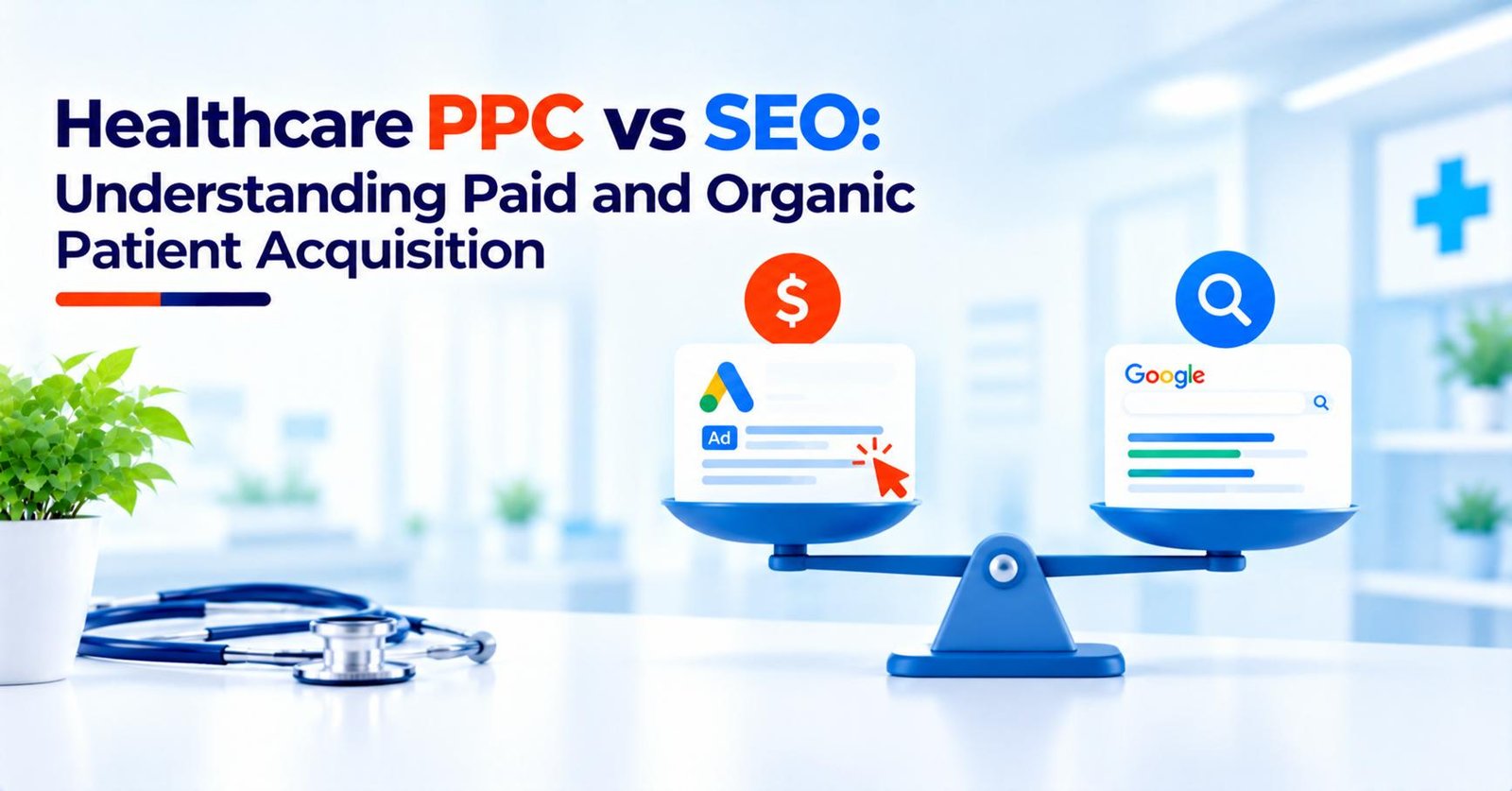
When people search online for doctors, hospitals, clinics, and healthcare services, they may discover providers through paid advertisements or organic search results. Both channels can help healthcare organizations improve online visibility, but they work differently and require different strategies.
Pay-per-click (PPC) advertising allows eligible healthcare businesses to pay for advertising placements, while search engine optimization (SEO) focuses on improving a website’s visibility in unpaid search results.
For hospitals, clinics, diagnostic centres, and other healthcare organizations, choosing between these approaches depends on their goals, budget, competition, and long-term marketing plans.
A well-planned Healthcare PPC Advertising Services strategy can support paid visibility and relevant enquiries, while healthcare SEO can help build a stronger organic presence over time. Understanding the differences makes it easier to decide how these channels can work together.
What Is Healthcare PPC Advertising?
Healthcare PPC advertising is a paid digital marketing approach that helps eligible healthcare organizations display advertisements for relevant searches.
For example, a healthcare facility may run a Google Ads campaign to reach people searching for information about a permitted service in its service area.
Depending on the campaign type and bidding model, advertisers generally pay when someone clicks an advertisement or when another specified advertising action occurs.
Healthcare PPC commonly involves:
- Keyword research and campaign planning
- Advertisement creation
- Budget and bidding management
- Geographic targeting where appropriate
- Landing page optimization
- Conversion tracking and performance analysis
One of PPC’s main advantages is that advertisers can begin reaching eligible audiences after their campaigns are approved and become eligible to serve. Actual visibility depends on factors such as competition, bidding, budget, relevance, and platform policies.
What Is Healthcare SEO?
Healthcare SEO involves improving a healthcare website so that search engines can understand its content and present relevant pages in organic search results.
The process can include technical website improvements, content optimization, keyword research, internal linking, website usability, and local SEO where relevant.
For example, a hospital may publish an educational article explaining a medical specialty or improve a service page so visitors can understand the department’s facilities and services more easily.
Healthcare SEO activities may include:
- Researching relevant search topics
- Optimizing titles, headings, and page content
- Improving website speed and mobile usability
- Resolving technical SEO issues
- Creating useful educational resources
- Improving internal links and website structure
- Maintaining accurate local business information
Unlike PPC, SEO does not involve paying for each organic click. However, it requires time, expertise, content development, technical work, and ongoing maintenance.
Organic rankings are not guaranteed, and results may take time to develop.
Healthcare PPC vs SEO: Key Differences
Although PPC and SEO both support online visibility, they differ in how visibility is earned, how costs are managed, and how results develop.
1. Paid Visibility vs Organic Visibility
PPC provides paid advertising placements when campaigns are eligible to appear. Advertisers can manage budgets, bids, targeting settings, and campaign objectives.
SEO focuses on earning visibility in organic search results through relevant content and a technically accessible website.
Best suited for: PPC may be useful when a healthcare organization needs to test paid search opportunities or promote eligible services within a defined campaign period. SEO is valuable for developing long-term organic visibility.
2. Speed of Results
PPC can begin generating impressions and clicks relatively quickly after campaign approval and launch. However, generating relevant enquiries depends on the quality of the campaign and the website experience.
SEO generally takes longer because search engines need to discover, crawl, understand, and evaluate website content and other ranking signals.
Best suited for: PPC can support short-term visibility objectives, while SEO is better approached as an ongoing investment in organic search presence.
Neither approach guarantees a particular number of appointments or enquiries.
3. Cost Structure
PPC involves direct advertising expenditure, and costs can change according to competition, bidding strategy, targeting, and campaign performance.
SEO does not charge a fee for each organic click, but it still requires resources for strategy, content creation, technical optimization, and monitoring.
Best suited for: PPC can suit organizations with a defined advertising budget. SEO can suit organizations prepared to invest in improving their website and content over time.
The right comparison considers the total cost of each channel rather than assuming that organic traffic is completely free.
4. Long-Term Value
Paid search visibility depends on campaign eligibility and continued advertising activity. If a campaign stops running, its paid placements generally stop as well.
SEO improvements can continue to support organic visibility after the initial work, although rankings and traffic may change as search results, competitors, and website content evolve.
Best suited for: SEO can contribute to sustained organic visibility, while PPC offers more direct control over paid campaign activity.
How PPC Can Support Healthcare Patient Acquisition
Healthcare PPC can help eligible organizations connect with people searching for relevant service information.
Reach Relevant Search Audiences
Search advertising allows campaigns to target appropriate keyword themes and, where suitable, geographic areas.
This can help a local healthcare facility focus on searches related to the services it actually provides.
Test Search Demand
PPC campaigns can provide information about impressions, clicks, search terms, and tracked conversions. This data can help marketers evaluate whether selected keywords and landing pages are relevant to the campaign objective.
The results should be interpreted carefully, as advertising performance can vary with competition and other market conditions.
Direct Users to Relevant Pages
A well-structured campaign can send users to specific service pages rather than requiring everyone to navigate from the homepage.
Relevant landing pages can make it easier to find factual information about services, locations, and contact options.
How Healthcare SEO Supports Organic Patient Acquisition
SEO helps healthcare websites become more discoverable through useful content and a well-organized website experience.
Answer Relevant Healthcare Questions
People often search for explanations of medical terminology, healthcare services, and general health topics.
Accurate educational content can help a website address these information needs and establish a useful resource for visitors.
Medical content should be reviewed appropriately and should not promise treatment outcomes or substitute for individualized professional advice.
Improve Website Structure and Usability
A clear website structure helps visitors navigate between departments, service pages, educational resources, and contact information.
Technical SEO can also help search engines access and understand the website.
Support Local Discoverability
For healthcare providers serving particular areas, local SEO can help maintain accurate business information and improve the website’s relevance for local searches.
Local visibility depends on multiple factors, and SEO cannot guarantee a specific ranking or patient volume.
Should Healthcare Businesses Choose PPC or SEO?
The answer depends on the organization’s current priorities and resources.
PPC may be worth considering when a healthcare business wants to test eligible search campaigns, promote permitted services within a defined budget, or gather data about search demand.
SEO may be more suitable when the organization wants to improve its website structure, build educational content, and develop organic visibility over time.
Some healthcare organizations may benefit from combining both channels, while others may need to focus on one approach first.
Before deciding, consider:
- Marketing objective: Is the priority paid visibility, organic growth, or both?
- Budget: What resources are available for advertising and ongoing website improvements?
- Website readiness: Can the website provide accurate, relevant information to visitors?
- Competition: How competitive are the relevant searches?
- Measurement: Can meaningful outcomes be tracked responsibly?
- Compliance: Are the proposed services, advertisements, landing pages, and tracking practices permitted?
These factors provide a more useful basis for decision-making than choosing a channel based only on popularity.
How PPC and SEO Can Work Together
PPC and SEO do not have to operate as separate strategies. When managed together, they can support different parts of a healthcare organization’s digital marketing plan.
Use Keyword Insights to Inform Content Planning
Search-term data from eligible PPC campaigns may help marketers understand which queries are relevant to a campaign.
These insights can inform future content planning, although paid search performance does not automatically predict organic rankings.
Align Advertisements With Website Content
Both channels benefit from accurate, relevant landing pages.
A healthcare organization can improve the information architecture and content of its website so that paid visitors and organic visitors can find appropriate information more easily.
Measure Each Channel Separately
PPC and SEO should have clear objectives and separate reporting where appropriate.
PPC reports may include advertising expenditure, clicks, and cost per conversion. SEO reports may include organic impressions, clicks, relevant landing pages, and organic search visibility.
Combined reporting can provide a broader view of digital performance, but each channel should be evaluated according to its role.
Important Healthcare Advertising and Compliance Considerations
Healthcare organizations must consider platform rules and applicable professional and legal requirements when using paid advertising.
Google Ads restricts or limits certain healthcare-related advertisements, including some prescription drug services, medicines, fertility-related services, and other regulated categories. Requirements vary according to the service and location, and some advertisers need certification. <Cite refs={[“turn229780search0″,”turn229780search2”]}/>
Advertisers should review Google’s official Healthcare and Medicines advertising policy before launching campaigns.
Healthcare organizations should also avoid misleading medical claims, unsupported guarantees, inappropriate use of patient information, and other practices that could breach applicable rules.
SEO content requires similar care. Educational pages should be accurate, transparent, and responsibly written, especially when discussing medical conditions, procedures, and treatment options.
Privacy safeguards should also be considered when configuring analytics and advertising conversion tracking. Sensitive health information should not be unnecessarily collected or transmitted to marketing platforms.
How World SEO Services Can Support Healthcare PPC and SEO
At World SEO Services healthcare PPC and SEO can be coordinated as part of a broader digital marketing strategy.
Support may include keyword research, paid campaign planning, healthcare SEO, content optimization, landing page improvements, technical website reviews, and performance reporting.
For example, PPC can be used to evaluate eligible search advertising opportunities, while SEO can support the development of relevant service pages and educational resources.
The two channels should have clearly defined objectives, suitable measurement methods, and appropriate compliance checks.
Campaign recommendations should reflect the healthcare organization’s services, available budget, website readiness, target locations, and applicable advertising policies. Results depend on several factors, and neither paid advertising nor SEO can guarantee patient acquisition.
Conclusion
Healthcare PPC and SEO serve different purposes within digital marketing.
PPC can provide paid search visibility while eligible campaigns are active, whereas SEO focuses on developing organic visibility through useful content, technical improvements, and a relevant website experience.
For healthcare organizations, the right choice depends on their objectives, budget, competition, website readiness, and ability to measure meaningful results.
Healthcare PPC Advertising Services can support paid search opportunities, while SEO can contribute to longer-term organic discoverability. When appropriate, both channels can work together to create a more coordinated online presence.
World SEO Services can support this approach by aligning paid campaign planning with healthcare SEO, landing page optimization, content strategy, and performance analysis.
Ultimately, successful patient acquisition is not simply about generating more clicks or rankings. It is about helping people discover accurate, relevant healthcare information through responsible and well-managed digital channels.
FAQs
1. What is the main difference between healthcare PPC and SEO?
PPC uses paid advertising placements, generally charging advertisers for clicks or other defined actions depending on the bidding model. SEO focuses on improving visibility in unpaid organic search results through website and content optimization.
2. Is PPC better than SEO for healthcare businesses?
Neither is universally better. PPC may support more immediate paid visibility, while SEO focuses on organic visibility over time. The appropriate approach depends on the organization’s objectives, resources, and circumstances.
3. How long does healthcare SEO take to show results?
SEO timelines vary depending on website condition, competition, content quality, and other factors. Improvements may take time to develop, and no specific ranking or timeline can be guaranteed.
4. Can healthcare organizations use PPC and SEO together?
Yes, where appropriate. PPC can support paid visibility, while SEO can improve organic discoverability. Both can direct users toward relevant website information and should be measured according to their individual objectives.
5. What should healthcare businesses consider before starting PPC campaigns?
They should review their goals, advertising budget, relevant search terms, landing page quality, conversion tracking, healthcare advertising restrictions, and applicable professional and privacy requirements before launching campaigns.