
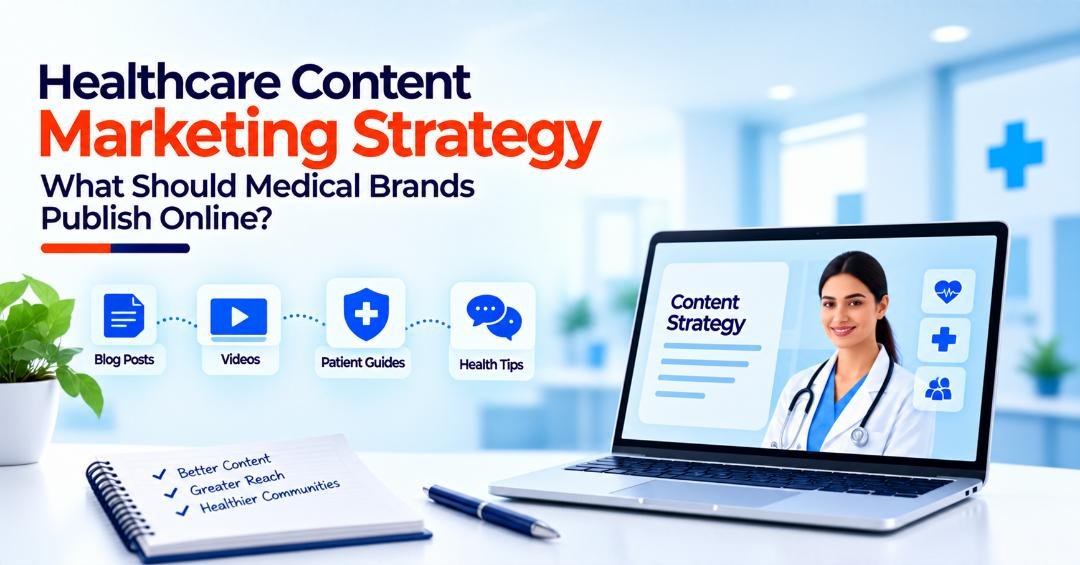
When people have questions about their health, they increasingly turn to the internet for information. They may search for symptoms, healthcare services, specialists, hospitals, clinics, treatment-related information, or answers to basic questions before deciding whether to contact a healthcare provider.
This changing search behaviour has made content an important part of healthcare digital marketing.
For medical brands, however, content marketing is not simply about publishing regular blog posts or using keywords to attract website traffic. Healthcare content needs to be useful, understandable, accurate, and responsible. It should help people find relevant information while also building confidence in the healthcare organization.
A well-planned healthcare content marketing strategy can support search visibility, patient education, brand trust, local discovery, and relevant enquiries. But the strategy should begin with a simple question:
What information does the audience genuinely need?
From service pages and educational articles to FAQs, videos, social media posts, and location-based content, healthcare brands have many opportunities to communicate online. The challenge is knowing what to publish, who it is for, and how each piece of content supports the wider patient journey.
What Is Healthcare Content Marketing?
Healthcare content marketing is the planned creation and distribution of useful information related to healthcare services, medical topics, patient questions, and the needs of a healthcare audience.
It can include:
- Healthcare blog articles
- Service pages
- Specialty pages
- Doctor and provider information
- FAQs
- Educational guides
- Condition-related content
- Preventive healthcare information
- Social media content
- Videos
- Infographics
- Email content
- Local healthcare content
The purpose is not to publish as much content as possible.
Instead, content should have a clear role. One page may help someone understand a healthcare topic, another may explain a service, while another may help a local patient find a nearby provider.
When these pieces work together, they create a more useful digital experience.
Why Content Matters for Healthcare Brands
Healthcare decisions often begin with questions.
Someone may not immediately search for a specific hospital or clinic. They may first search for information related to a concern and only later start looking for a healthcare provider.
For example, the journey could look like:
Question → Research → Provider Search → Comparison → Trust → Enquiry
Content can support different stages of this journey.
Educational content can help with early research. Service pages can explain what a provider offers. Location pages can support local discovery. FAQs can answer practical questions. Trust-focused content can help people understand the organization.
This makes content more than an SEO activity. It becomes part of how a healthcare brand communicates with potential patients.
Start With Audience and Search Intent
Before deciding what to publish, healthcare brands should understand who they are trying to reach.
A hospital may have multiple audiences across different specialties. A dental clinic may have a more focused local audience. A diagnostic centre may need content around specific tests and services.
Audience research can consider:
- Services people are searching for
- Common questions
- Locations
- Search behaviour
- Healthcare concerns
- Frequently requested information
- Patient expectations
- Different stages of decision-making
Search intent is equally important.
A person searching “what is an MRI scan” has a different purpose from someone searching “MRI scan centre near me.”
The first search is primarily informational.
The second has a stronger local and service-related intent.
A good content strategy creates different types of content for these different needs.
What Types of Content Should Healthcare Brands Publish?
There is no single content format that works for every medical organization. A strong strategy usually combines several types of content.
1. Healthcare Service Pages
Service pages are among the most important content assets for a healthcare website.
A service page should clearly explain what the organization offers and provide useful information about the service.
Depending on the healthcare business, a page may cover:
- Service overview
- Who the service is relevant to
- What the process generally involves
- Related specialties
- Frequently asked questions
- Location information
- Contact or appointment options
The page should be written for people first rather than created only to target a keyword.
2. Educational Blog Articles
Blogs can help healthcare brands answer questions that people commonly search online.
Topics can include:
- General health education
- Preventive care
- Healthcare procedures
- Common questions
- Preparation information
- General lifestyle topics
- Specialty-related education
The objective should be to provide useful information rather than make every article promotional.
For example, a hospital can publish educational content explaining general factors patients may want to discuss with a healthcare professional instead of turning every article into a sales message.
3. Frequently Asked Questions
FAQs are valuable because people often search using direct questions.
Healthcare websites can create FAQs around:
- Services
- Appointment procedures
- General preparation
- Locations
- Working hours
- Common patient questions
- Healthcare terminology
FAQs can also support AEO because clearly structured questions and answers are easier for modern search systems to understand.
However, answers should remain accurate and should not provide personalized medical advice where professional consultation is necessary.
4. Doctor and Specialist Content
People often want to understand who provides a particular healthcare service.
Where appropriate, healthcare websites can provide useful information about:
- Doctor specialties
- Professional qualifications
- Areas of practice
- Experience
- Associated departments
- Consultation information
This type of content can help patients understand whether a provider is relevant to their needs.
It also provides an opportunity to communicate professional expertise in a clear and transparent way.
5. Condition and Health Education Content
Healthcare organizations can create educational resources around conditions and health concerns relevant to their specialties.
Such content may explain:
- Basic meaning of a condition
- Common signs or symptoms
- General risk factors
- When professional evaluation may be appropriate
- Common diagnostic approaches
- General treatment categories
The language should remain understandable.
Healthcare content should also make it clear when individual medical advice requires consultation with a qualified professional.
6. Preventive Healthcare Content
Preventive healthcare can be another valuable content area.
Depending on the organization’s expertise, topics may include:
- General wellness
- Preventive check-ups
- Healthy lifestyle habits
- Screening awareness
- Seasonal health information
- General health education
This type of content can help healthcare brands become useful resources rather than appearing online only when promoting a service.
7. Local Healthcare Content
For clinics, hospitals, diagnostic centres, and other location-based providers, local content can support discovery.
Healthcare brands may create useful content around:
- Services available in a city
- Healthcare specialties
- Local patient resources
- Facility information
- Location-specific FAQs
- Service availability by location
However, location pages should provide genuinely useful local information.
Creating many pages with almost identical content and simply changing the city name can create a poor user experience.
8. Video Content
Healthcare information is increasingly consumed through video.
Medical brands can use videos for:
- General health education
- Doctor introductions
- Facility information
- Frequently asked questions
- Service explanations
- Awareness campaigns
- Patient guidance
Video can make complex information easier to understand when it is presented clearly.
Healthcare brands should still apply appropriate privacy, consent, and professional standards when creating video content involving patients or healthcare professionals.
9. Social Media Content
Social media can extend the reach of healthcare content.
Instead of treating social media as a separate promotional channel, healthcare organizations can use it to distribute useful information from their broader content strategy.
Possible topics include:
- Health awareness
- Educational tips
- FAQs
- General preventive information
- Healthcare events
- Service information
- Doctor or department introductions
The content should remain responsible and should not encourage people to publicly share sensitive health information.
Build Content Around the Patient Journey
A healthcare content strategy becomes stronger when content is mapped to different stages of the patient journey.
Awareness Stage
At this stage, the person may be looking for general information.
Content can include educational articles, basic explanations, awareness content, and general FAQs.
Consideration Stage
The person is now exploring healthcare options.
Useful content may include service pages, specialist information, provider information, treatment-related educational resources, and location details.
Decision Stage
The person may be closer to contacting a healthcare organization.
Content should make practical information easy to find, including:
- Contact details
- Appointment information
- Location
- Available services
- Provider information
- Relevant FAQs
Post-Contact Stage
Content can also support people after they have interacted with the organization.
Depending on the healthcare service, this may include general preparation information, educational resources, or frequently requested administrative guidance.
Healthcare Content Should Answer Real Questions
One of the strongest ways to plan content is to start with actual audience questions.
These questions can come from:
- Search queries
- Website search data
- FAQs from staff
- Patient enquiries
- Consultation-related questions
- Social media interactions
- Existing website analytics
For example, if people repeatedly ask how to prepare for a particular diagnostic test, that question may deserve a dedicated resource.
This approach is more useful than selecting topics only because they contain a high-volume keyword.
Quality Matters More Than Content Volume
Publishing dozens of articles does not automatically create a strong healthcare website.
A website with 30 genuinely useful resources may provide more value than one with hundreds of repetitive articles.
High-quality healthcare content should aim to be:
- Accurate
- Original
- Relevant
- Clear
- Well-structured
- Useful
- Easy to read
- Appropriately reviewed
Every article should have a purpose.
Before publishing, ask:
Does this content answer a genuine question?
Does it provide information that the reader can understand?
Is the information accurate and appropriately reviewed?
Does it add something useful to the website?
These questions help prevent content production from becoming a numbers game.
How Healthcare Content Supports SEO
Content plays an important role in healthcare SEO, but SEO should not be reduced to keyword placement.
A strong content strategy can support search visibility by creating relevant resources around services, specialties, questions, and topics.
Healthcare content can contribute through:
- Topic relevance
- Search-intent alignment
- Internal linking
- Supporting service pages
- Local relevance
- Topical depth
- Useful FAQs
- Natural keyword usage
For example, a healthcare service page may link to several educational resources that explain related questions.
This creates a logical connection between information and services.
The goal is to build a website that search engines can understand and users can navigate easily.
Healthcare Content and AEO
Search is increasingly becoming question-based.
Users can ask complete questions through AI-powered search platforms rather than entering short keywords.
For example:
“What should I consider before choosing a diagnostic centre?”
Healthcare websites can prepare for this change by creating clear answers to meaningful questions.
AEO-friendly healthcare content can include:
- Direct answers
- Clear headings
- Question-based sections
- Relevant FAQs
- Simple explanations
- Logical content structure
- Supporting context
However, optimizing for AI search should not mean writing artificial content.
The same principle remains important:
Create useful information for people first.
Trust Should Be Part of Every Healthcare Content Strategy
Healthcare content has a direct relationship with brand credibility.
A medical brand should avoid content practices that can damage trust, such as:
- Unsupported medical claims
- Guaranteed outcomes
- Fear-based messaging
- Fake testimonials
- Misleading statistics
- Overly promotional articles
- Unverified information
Instead, content should communicate responsibly.
Where appropriate, healthcare brands can strengthen trust by clearly presenting professional information, relevant credentials, appropriate author or reviewer details, and reliable references.
The Role of Human Expertise
Healthcare content should not be created entirely through automation.
AI tools can support research, topic planning, outlines, and content workflows, but human expertise remains important.
Medical topics may require review by qualified professionals, while experienced editors can ensure the content is understandable and appropriate for its audience.
This combination can help healthcare brands maintain both efficiency and quality.
How World SEO Services Can Support Healthcare Content Marketing
At World SEO Services healthcare content marketing can be approached as part of a wider digital strategy rather than as a standalone blogging activity.
The content strategy can connect with:
- Healthcare SEO
- Local SEO
- Healthcare website development
- AEO
- Social media marketing
- Lead generation
- Reputation management
- AI-focused search optimization
For example, a service page can be supported by educational articles, FAQs, local content, and social media resources. These different assets can work together to improve information discovery and create a clearer digital journey.
The exact content mix should depend on the healthcare organization’s services, audience, locations, competition, and objectives.
How to Build a Practical Healthcare Content Calendar
A healthcare content calendar should be based on audience needs rather than random publishing dates.
A practical planning process can include:
Step 1: Identify Core Services
List the major services and specialties the organization wants to support.
Step 2: Research Questions
Identify common questions related to those services.
Step 3: Group Topics
Organize topics into categories such as educational, service-focused, local, FAQ, and awareness content.
Step 4: Map Search Intent
Determine whether each topic is informational, local, commercial, or action-oriented.
Step 5: Select the Right Format
Decide whether the information should become a blog, service page, FAQ, video, social post, or another format.
Step 6: Create and Review
Develop the content and ensure important healthcare information receives appropriate review.
Step 7: Publish and Measure
Track performance and identify which topics are attracting relevant audiences.
Step 8: Update
Healthcare content should be reviewed periodically to keep important information current.
Common Healthcare Content Marketing Mistakes
Even well-established healthcare brands can make content mistakes.
Some common problems include:
- Publishing only promotional content
- Writing articles solely for keywords
- Creating repetitive location pages
- Ignoring patient questions
- Using overly technical language
- Publishing unverified AI-generated content
- Creating content without search intent
- Failing to update older information
- Ignoring internal linking
- Focusing only on traffic instead of useful engagement
- Publishing large amounts of low-value content
Avoiding these issues can make a healthcare content strategy more sustainable.
What Makes a Strong Healthcare Content Strategy?
A strong strategy does not necessarily require the largest content library.
It needs the right content for the right audience at the right stage.
A useful healthcare content strategy should be:
Patient-focused: It addresses genuine information needs.
Search-aware: It understands how people search online.
Accurate: Important healthcare information is properly reviewed.
Structured: Content is organized logically across the website.
Trust-focused: It communicates responsibly and transparently.
SEO-friendly: Content supports relevant search visibility naturally.
AEO-ready: Important questions are answered clearly.
Consistent: Content supports the broader healthcare brand.
When these elements work together, content becomes a long-term digital asset rather than a collection of disconnected blog posts.
Conclusion
A successful healthcare content marketing strategy is about much more than deciding how many blogs a medical brand should publish each month.
Healthcare organizations need content that answers real questions, explains services clearly, supports patients during different stages of their online journey, and builds confidence in the organization.
Service pages, educational articles, FAQs, specialist information, local content, videos, social media posts, and awareness resources can all play different roles within the strategy.
At the same time, quality must remain more important than content volume. Healthcare information should be accurate, understandable, responsibly presented, and appropriately reviewed.
For medical brands investing in Healthcare Content Marketing Services, the strongest approach is to create a connected content ecosystem supported by healthcare SEO, local search, AEO, website optimization, and patient-focused communication.
When content genuinely helps people find answers and understand their healthcare options, it can support both a better digital experience and stronger long-term visibility for the healthcare brand.
FAQs
1. What should healthcare brands publish online?
Healthcare brands can publish service pages, educational blogs, FAQs, specialist information, condition-related resources, preventive healthcare content, local information, videos, and social media content. The right mix depends on the organization’s services and audience.
2. How often should a healthcare website publish new content?
There is no universal publishing frequency. Quality and relevance are more important than publishing a large number of articles. Healthcare brands should focus on creating useful content consistently and updating existing information when necessary.
3. How does healthcare content marketing help SEO?
Useful healthcare content can support SEO by addressing relevant search intent, building topical relevance, supporting service pages, improving internal linking, answering common questions, and creating resources that are valuable to users.
4. Should healthcare content be written by AI?
AI can assist with research, planning, outlines, and drafting, but healthcare content should not rely on AI without appropriate human review. Important medical information should be checked for accuracy, context, and responsible communication before publication.
5. How can healthcare content appear in AI-powered search?
Healthcare brands can improve their chances of being understood by modern search systems by creating clear, well-structured, trustworthy content that directly answers relevant questions. FAQs, descriptive headings, natural language, strong topical coverage, and accurate information can support an AEO-focused content strategy.